
Last updated October 17, 2026
 Metal roofing
 Architectural shingles
 Tile roofing
 GAF
GAF Owens Corning
 Flat & low-slope
Free roof inspection with deck photos before we talk money - GAF and Owens Corning certified installation
Seasonal Roofing Care for Fort Worth: Year-Round Homeowner’s Guide
Fort Worth averages more than 50 days above 100°F every summer, and those brutal stretches arrive right after a spring hail season that can strip granules from the same shingles. The result is a roof that looked fine in February but is functionally compromised before August, often without a single obvious leak. This guide walks through the predictable sequence of weather damage Fort Worth roofs face each year, season by season, so you can protect your roof between events instead of reacting after the damage is done. For a deeper dive, see The Complete Guide to Roofing in Fort Worth. We’ll cover what to check, when to check it, and what to ask a roofer when it’s time to call one.
Quick Answer
Seasonal roofing care in Fort Worth means checking for spring hail damage and debris dams, managing summer attic heat that bakes shingles from below, clearing oak and pecan leaves from gutters and valleys every fall, and inspecting flashings and pipe boots before winter’s freeze-thaw cycles pull them apart. A homeowner who follows this seasonal rhythm catches small problems before they become leaks, saving thousands on preventable repairs. Most of these checks take under an hour and require no ladder work beyond a visual inspection from the ground or a safe look from a window.
Styles & brands we work with
Table of Contents
- Spring Hail Season: The Granule Stripper
- Summer Heat: How Your Attic Bakes the Shingles
- Fall Debris: Oak Leaves, Pecans, and Standing Water
- Winter Freeze-Thaw: The Joints That Move
- Year-Round Maintenance Routine for Fort Worth Roofs
- Ventilation Ratios: What to Ask at Your Next Inspection
- What You Can Check Yourself vs. When to Call a Professional
Spring Hail Season: The Granule Stripper
Fort Worth sits in the heart of Texas hail country. Between March and May, the city regularly sees storms capable of producing hail from pea-sized up to golf-ball and occasionally baseball-sized stones. The National Weather Service has documented hundreds of hail events across Tarrant County in the past two decades, and each one hits asphalt shingles differently depending on size, fall angle, and shingle age.
The damage isn’t always a hole. Hail strikes knock the ceramic granules off asphalt shingles, exposing the asphalt substrate underneath. Once exposed, that asphalt begins oxidizing under UV light within weeks. A shingle that loses 20% of its granules might not leak today, but it has lost a meaningful portion of its lifespan. In our experience across Fort Worth neighborhoods from Wedgwood to Ryan Place, granule loss from spring storms is the single most common hidden roofing issue we document during summer inspections.
What to Check After a Fort Worth Hail Storm
- Gutters and downspout splash blocks. Granules wash down during the first rain after a hailstorm. If you see a buildup of dark granules at the bottom of downspouts, your shingles shed material.
- Valleys and roof edges. These are where hail hits at the most direct angle. Look for shingles with exposed or shiny spots compared to surrounding areas.
- Metal surfaces. Check vent caps, flashing, and any exposed metal for dents. Dented metal is a reliable indicator that the roof took hits hard enough to damage shingles too.
- Around the perimeter from the ground. Hail often knocks shingles loose along rakes and eaves. Walk the yard perimeter and look for lifted or missing shingle corners.
Spring is also when Fort Worth’s post-oak landscapes drop a final round of dead leaves and twigs from winter, and spring storms push them into valleys and behind chimneys. A debris dam in a valley backs up water during the next rain, forcing it sideways under shingles. That’s why spring is the only season when hail damage and debris dam risk are elevated at the same time. Prioritize two things after any spring storm: check for granule loss, and clear debris from valleys and gutters before the next rain.
If you see significant granule loss or dented flashing, get a professional assessment. Roof Repair in Fort Worth from a local company should include a written evaluation of what hail did and what needs attention now versus what can wait. Birchbark Roofing Fort Worth does this at no charge as part of a free estimate.
Summer Heat: How Your Attic Bakes the Shingles
Fort Worth’s summer temperatures routinely push attic spaces to 140°F or higher. That heat radiates upward through the roof deck and cooks asphalt shingles from below, accelerating the breakdown of the asphalt compounds that hold the shingle together. Combined with direct sun hitting the shingle surface at 160°F or more, the shingle experiences thermal stress from two directions at once.
The mechanism is straightforward. Asphalt shingles rely on petroleum-based compounds for flexibility and water resistance. Sustained high heat speeds the evaporation of the lighter oils in that asphalt, making shingles brittle. Brittle shingles crack at the edges during temperature swings, and cracked shingles let water in during the next rain. A roof in Fort Worth with poor attic ventilation can age 30-40% faster than the same roof with proper airflow, even if both were installed the same year.
Signs Your Attic Ventilation Is Failing
- Upstairs rooms stay noticeably hotter than the rest of the house in summer, even with AC running.
- You can feel heat radiating from the ceiling when you hold your hand near it.
- Shingles are curling at the edges or cracking in a pattern not tied to any impact damage.
- Your cooling bills climb year over year without a change in usage habits.
- The attic smells like hot asphalt on peak summer days.
The fix is ventilation math. Most Fort Worth homes need a balanced system: intake vents (soffit or eave vents) and exhaust vents (ridge, box, or powered vents). The general rule is 1 square foot of net free vent area for every 150 square feet of attic floor space, or 1:300 if the attic has a vapor barrier. But Fort Worth’s heat makes 1:150 the safer target, and many older homes in neighborhoods like Ridglea Hills and Fairmount have far less than that.
We’ve walked attics in mid-July where the temperature difference between a properly vented attic and its under-vented neighbor was 25°F. That difference compounds across an entire summer. If you haven’t had your ventilation measured, ask for a ratio calculation at your next inspection. It’s a 10-minute measurement that tells you whether your roof is aging faster than it should.
Fall Debris: Oak Leaves, Pecans, and Standing Water
Fort Worth’s fall brings leaf drop from live oaks, post oaks, and pecans across the city’s older neighborhoods. Live oak leaves are small and leathery, pecan leaves are large and waxy, and both break down slowly when wet. They accumulate in gutters, valleys, and around pipe boots, creating dams that hold water against the roof surface.
Standing water is the quiet killer here. A clogged gutter overflows against the fascia, and water wicks backward into the soffit and under the drip edge. A clogged valley holds water against shingle edges, and over weeks the water finds seams and nail penetrations. North Texas homeowners rarely think about ice dams the way Minnesota homeowners do, but the equivalent in Fort Worth is standing water infiltration from leaf-blocked drainage. The mechanism is different, the result is the same: water following paths it was never meant to follow.
The Fort Worth Fall Gutter and Valley Routine
- Mid-October: Clear gutters and downspouts once. Live oaks have mostly finished their spring leaf drop by now, and pecan leaves are falling.
- Late November: Clear again. This is the second major leaf drop, and pecans are still shedding. Check valleys visually for leaf piles.
- After the first hard freeze: Check downspouts for ice blockage at the bottom elbows. Fort Worth’s freeze-thaw cycles can freeze water in downspout bends even when gutters are clear.
- Any time you hear water splashing against the house during rain: That sound means an overflow. Mark the spot and check the gutter above it at the first dry opportunity.
Pecan nuts add a second hazard. Squirrels harvesting pecans drop shells and partially eaten nuts onto roofs, and the shells hold moisture against the shingle surface. They also lodge in downspout openings. A quick walk around the house during pecan season to check for accumulations on flat or low-slope areas takes five minutes.
Winter Freeze-Thaw: The Joints That Move
Fort Worth typically sees two or three hard freezes each winter, though February 2021 proved the city can experience a week of single-digit temperatures when the jet stream shifts. Each freeze-thaw cycle stresses the joints on your roof: flashings, pipe boots, ridge caps, and valley seams. These materials expand and contract at different rates than the shingles and decking around them.
Metal flashing expands when heated and contracts when cooled. The caulk and sealant beds around flashing age with each cycle, eventually cracking or pulling away from the metal or the shingle surface. Rubber or neoprene pipe boots harden in cold weather and crack when the pipe moves slightly with temperature changes. A pipe boot that was flexible at installation can split after enough freeze-thaw cycles, and a split boot lets water run directly along the pipe into the attic.
What Freeze-Thaw Damage Looks Like
- Lifted flashing: The metal edge pulls up from the roof surface by a fraction of an inch. You can sometimes see this from the ground with binoculars.
- Hardened pipe boots: The rubber feels stiff and shows hairline cracks at the pipe junction when inspected up close.
- Loose ridge caps: Ridge cap shingles lift at the edges after the underlying adhesive freezes and thaws, especially on older installs.
- Water stains in the attic: Check the attic ceiling around vent pipes and chimneys after the first hard freeze of the season.
The most vulnerable time is not during the freeze itself but during the thaw that follows. Frozen materials are rigid and stable, but the thaw lets water move into gaps that opened while frozen. That’s why Fort Worth roofers stay busy the week after every winter storm, chasing leaks that appeared during the first warm day. If you can safely inspect your attic around pipe penetrations and chimney framing before and after a hard freeze, you’ll catch moisture before it becomes a stain.
For a deeper look at how winter damage manifests and what repair options exist, see our guide to Roofing Company in Fort Worth services.
Year-Round Maintenance Routine for Fort Worth Roofs
Most of these checks take under an hour and require no special tools beyond a pair of binoculars and a willingness to walk the perimeter of your home.
The Monthly Visual Check
- Walk the perimeter with binoculars. Look for lifted shingles, cracked shingles, missing granules, and debris accumulation at the edges.
- Check the gutters and downspouts. Especially after any storm or heavy wind. Clear anything that obstructs flow.
- Look at the flashings. Where the roof meets chimneys, walls, skylights, and vent pipes. Gaps or lifted metal need attention.
- Scan the attic ceiling. Once a month, look for any darkening or staining around the perimeter, especially near penetrations.
The Seasonal Deep Check
Four times a year, aligned with the seasonal risks above, do a more thorough review. Spring focuses on hail and granule loss. Summer focuses on attic temperature and ventilation performance. Fall focuses on debris and drainage. Winter focuses on flashing, pipe boots, and freeze-thaw stress. This rotating focus means each part of the roof gets examined at the time it’s most likely to show damage.
A written checklist helps. Even a simple notebook page with the date and what you observed creates a record that’s valuable if you ever file an insurance claim or want a second opinion from a roofer. We recommend homeowners keep notes on the same sheet so patterns emerge: if you find granule loss every spring, that’s a signal to consider shingle quality and impact rating at the next Roof Replacement in Fort Worth.
Ventilation Ratios: What to Ask at Your Next Inspection
Ventilation is the least visible part of the roof system and the one most Fort Worth homes get wrong. The math is straightforward, but builders in the 1980s and 1990s often installed what met code at the time, which was frequently less than what Fort Worth’s climate actually requires.
Ask your roofer to calculate the net free vent area (NFVA) of your current system. The calculation compares the total square inches of intake and exhaust venting against the attic floor square footage. The International Residential Code baseline is 1:150 (one square foot of venting per 150 square feet of attic floor), with an exception to 1:300 when certain conditions are met. For Fort Worth’s summer heat, 1:150 is the number to target, and 1:100 is better for homes with dark shingles and full sun exposure on the west and south slopes.
When you hire a roofing contractor in Fort Worth, ask these three questions about ventilation measurement:
- “What is my current NVFA ratio?” If the answer is vague, ask for the numbers. The calculation is arithmetic, not opinion.
- “Are my intake and exhaust vents balanced?” An exhaust vent with no intake vent pulls air from the living space, not from the soffit. That wastes cooling and doesn’t cool the attic.
- “Where are my air leaks between the attic and living space?” Can lights, unsealed attic hatches, and bathroom fan penetrations let conditioned air into the attic. Sealing these is part of making ventilation work.
In our experience, most Fort Worth homes built before 2000 are under-ventilated relative to current best practice. The fix is often as simple as adding soffit vents or a ridge vent during a reroof, when the decking is exposed and the math is easiest to execute.
What You Can Check Yourself vs. When to Call a Professional
There’s a clear line between what a homeowner can safely inspect and what requires a trained roofer. Everything on the ground and everything visible with binoculars falls on the homeowner’s side. Everything that requires walking the roof surface belongs on the professional side.
Safe for Homeowners
- Ground-level perimeter walks with binoculars
- Gutter and downspout clearing from a ladder (with a second person stabilizing the ladder)
- Attic inspections from the attic floor along the decking
- Visual checks of interior ceilings and walls for stains or discoloration
- Photographing anything suspicious for your records
Leave to a Professional
- Walking the roof surface – Fort Worth roofs are steep in many historic neighborhoods, and falls are the leading cause of roofer injuries, not just homeowner injuries
- Inspecting flashings up close at chimneys and skylights
- Replacing pipe boots, flashing, or more than a few shingles
- Any work involving the roof edge, valleys, or ridge line
- Anything you can’t access safely with a properly stabilized ladder
The rule we use with our own families: if both feet can’t stay on the ground or on a stabilized ladder with three points of contact, the roof walk belongs to someone with training and equipment. Falls from even a single-story roof cause serious injuries every year in Tarrant County.
Common Mistakes to Avoid
- Ignoring the attic until there’s a leak. By the time water reaches the ceiling, it has already passed through the decking and insulation. Attic checks catch moisture days or weeks before it becomes visible inside the house.
- Clearing gutters once a year. Fort Worth’s dual leaf seasons (spring and late fall) mean gutters need attention at least twice a year, and more often if you have mature oaks or pecans on the property.
- Assuming one hail storm means no damage if the neighbors had none. Hail fall is patchy. Storms hit some streets hard and skip others. Your roof takes the hit it takes, regardless of what happened three houses down.
- Caulking over failed flashing instead of replacing it. Caulk is a temporary bandage. Flashing that has pulled away needs to be reset, and pipe boots that are cracked need replacement. Caulk alone typically fails within months on a moving joint.
- Waiting until October to think about fall leaves. Live oaks drop most of their leaves in February and March in Fort Worth, not October. Waiting for “fall” means gutters have been blocked for months by the time you clear them.
- Choosing a roofer based on same-day availability during storm season. The busiest storm chasers in Fort Worth are often the least established local companies. A roofer who can send someone tomorrow during peak season is a roofer who isn’t busy – and that’s usually a signal, not a bargain.
- Deferring maintenance because the roof “isn’t that old.” A 2018 roof in Fort Worth has already lived through multiple hail seasons and at least three hard freezes. Age is not a substitute for inspection.
See the difference
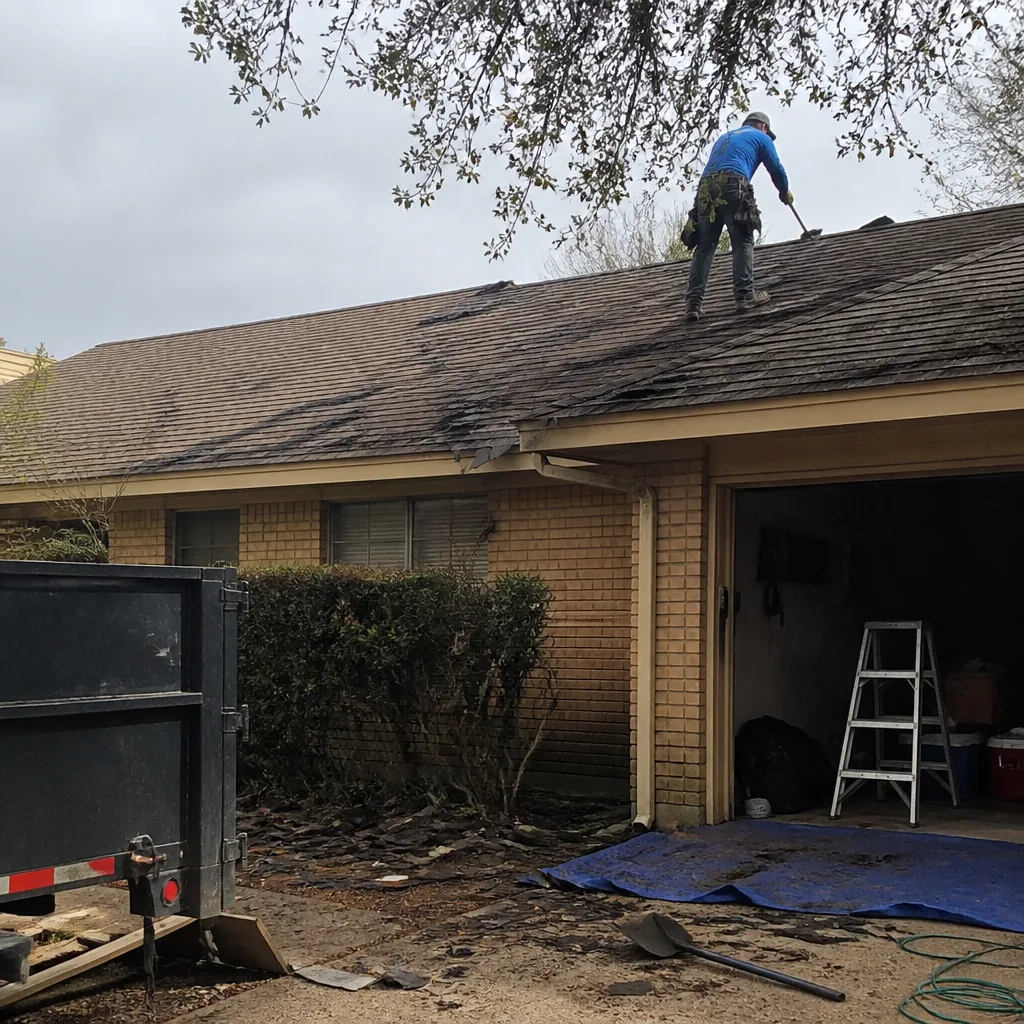 Before
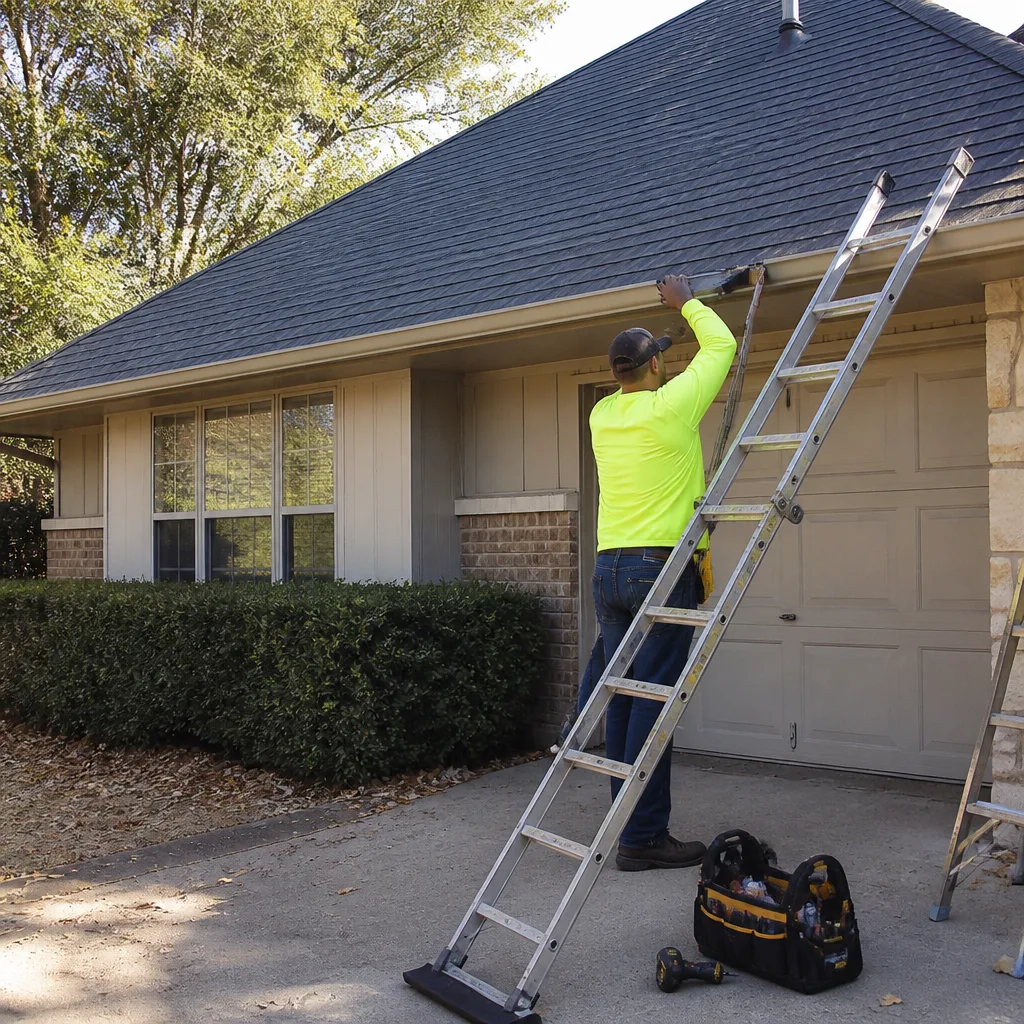 After
After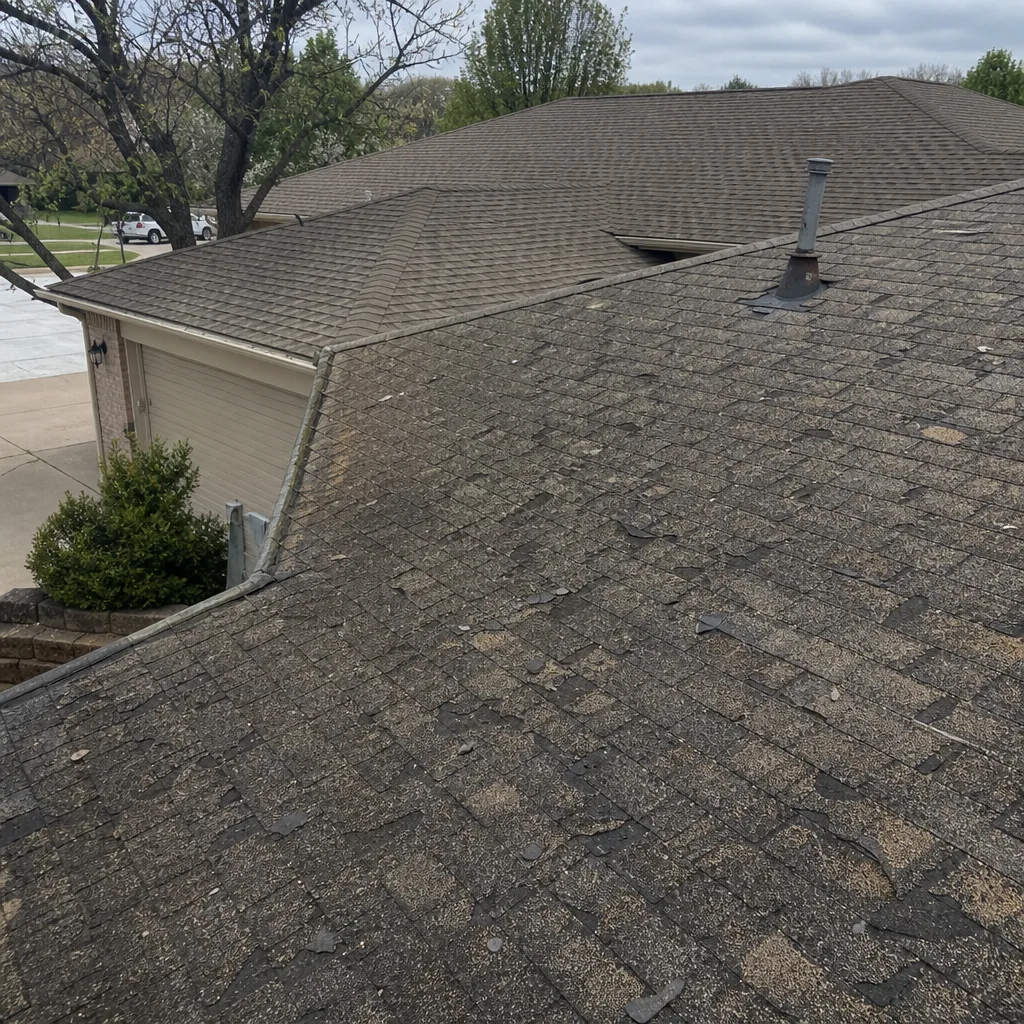 Before
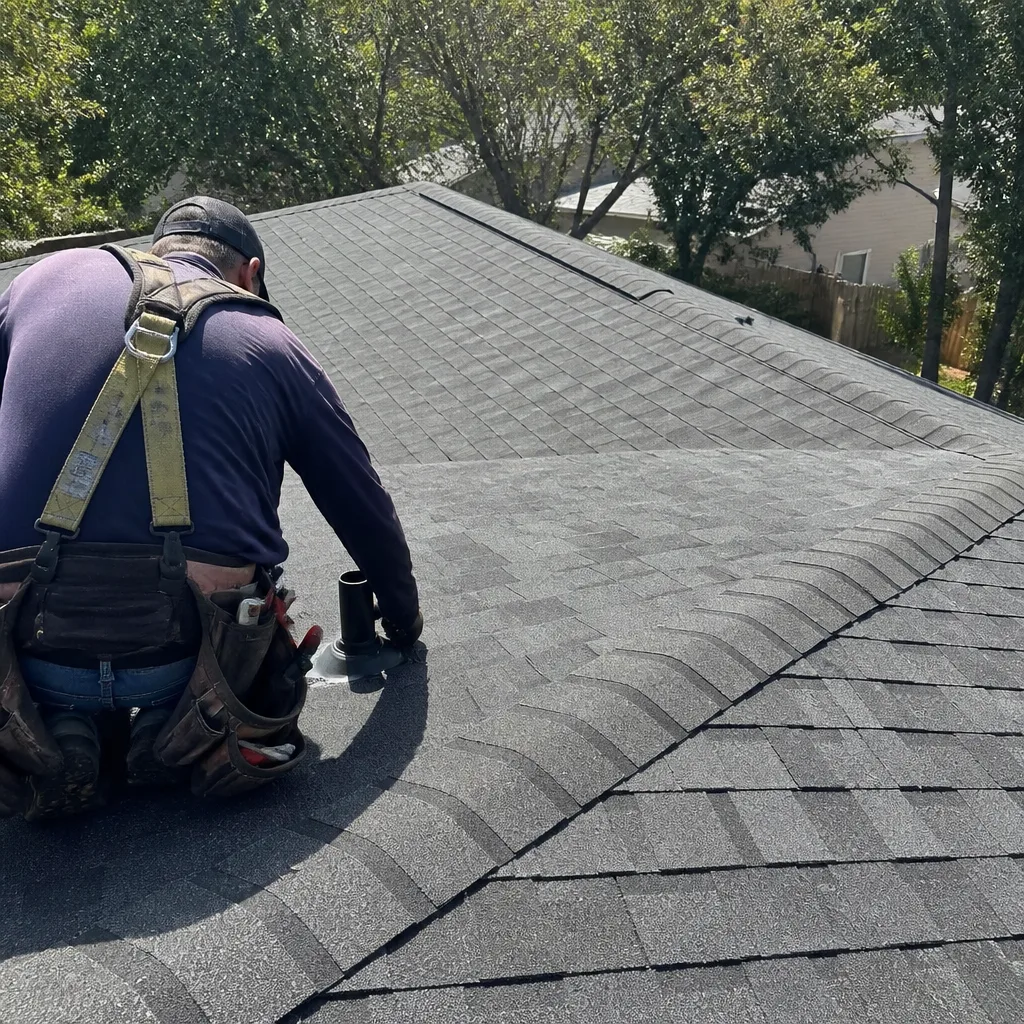 After
After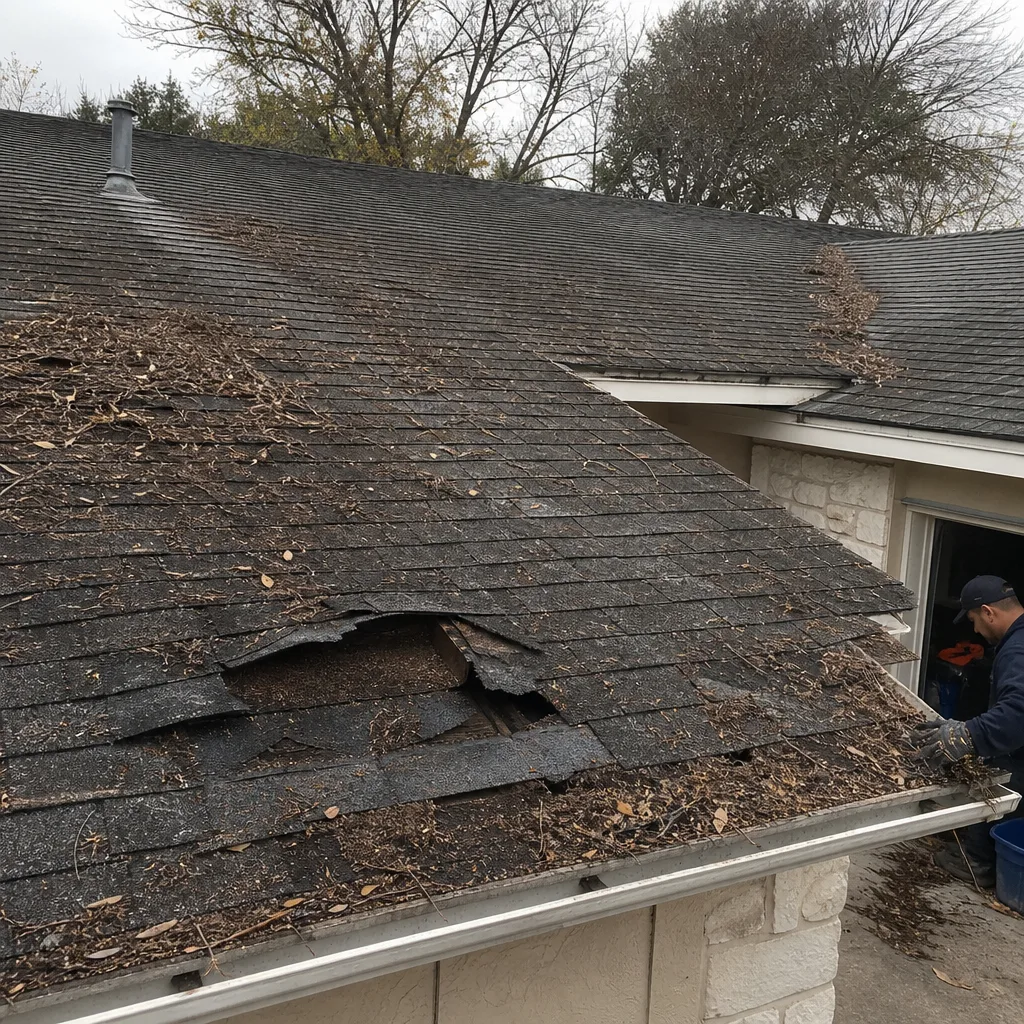 Before
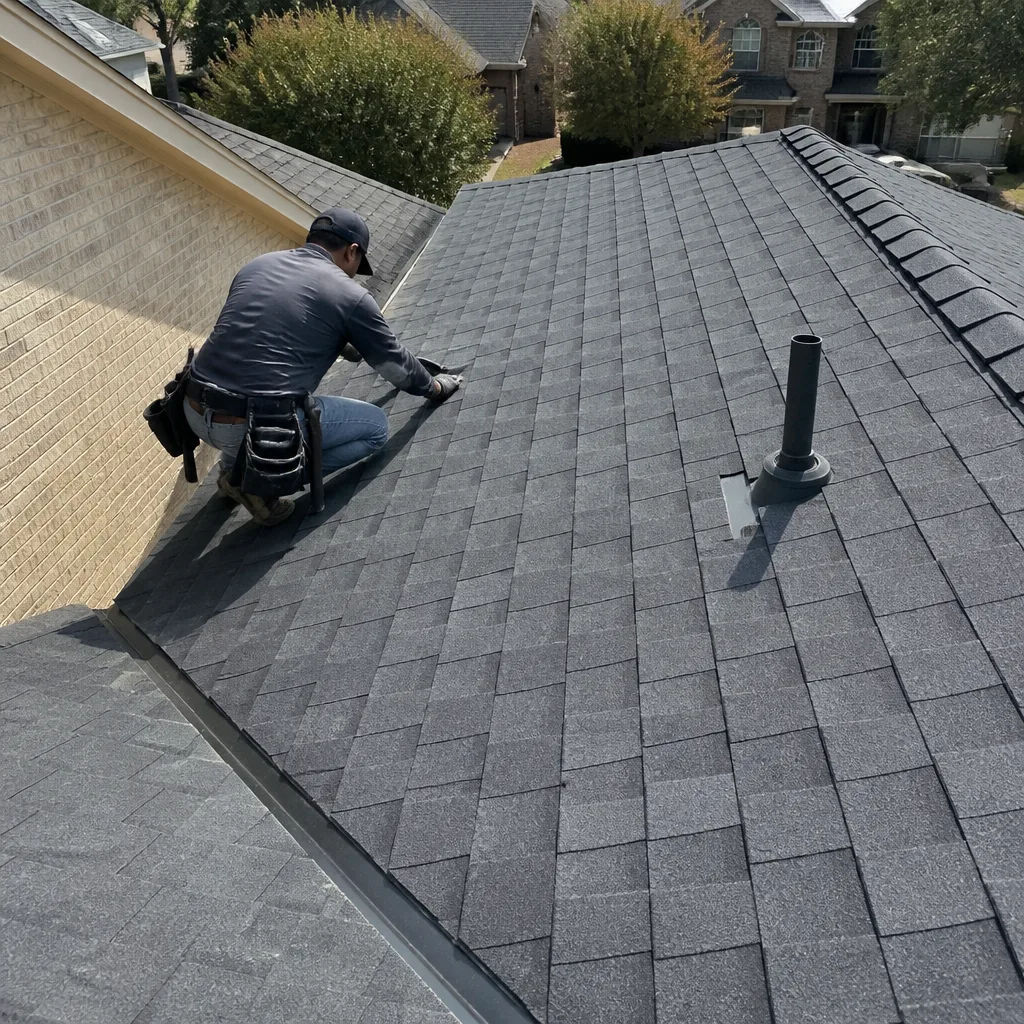 After
AfterWhen to Call a Professional
Call a roofer when you see granule loss after a hailstorm, lifted or cracked shingles, visible flashing gaps, attic stains around penetrations, or persistent gutter overflows. Call if your attic feels like an oven and you suspect ventilation needs work. And call if you’ve simply never had the roof inspected and the house is more than five years old. Birchbark Roofing Fort Worth home inspections are free, and we’ll give you a written assessment of what we find and what needs attention.
Birchbark Roofing Fort Worth offers free estimates in Fort Worth – call (682) 990-0964 to schedule yours. A live person answers the phone, and we’ll walk you through exactly what to expect before anyone climbs on your roof.
Frequently Asked Questions
Most seasonal roof maintenance in Fort Worth runs between $150 and $400 per visit depending on what needs clearing or sealing, and many homeowners spend less than $1,000 per year total on gutter clearing, pipe boot checks, and minor flashing work. A full roof inspection is often free, and a written quote for any repairs found is standard practice. Call (682) 990-0964 for an exact number on your home – the estimate is free.
Yes, you can safely inspect your own Fort Worth roof from the ground or a stabilized ladder, using binoculars to check shingles, flashings, and gutters. Walking the roof surface is not safe for homeowners and should be left to a professional with training and fall protection equipment, especially on the steeper roof slopes common in Fort Worth’s older neighborhoods.
You should clear your Fort Worth gutters at least twice a year – once in late February or early March after live oaks drop their leaves, and again in late November after pecan and post oak season. Homes with heavy tree cover may need three or four cleanings per year. The test is simple: if water overflows during rain, the gutters need attention now.
Impact-rated shingles in the Class 3 or Class 4 range hold up best to Fort Worth hail, and lighter-colored, heat-reflective shingles handle summer heat better than dark ones. We work with materials from GAF, Atlas, and Tamko, and each manufacturer offers impact-rated lines designed for hail-prone markets like North Texas. A replacement quote should include impact rating and ventilation plans as part of the discussion.
Insurance adjusters routinely deny claims when they find evidence of deferred maintenance, including long-term debris accumulation, uncleared gutters, and unrepaired flashing. Keeping a maintenance record with dates and photos strengthens your position. After any major hail event, document what you see within days, because adjusters look for evidence that damage is new, not pre-existing.
Pipe boots that are cracked, hardened, or split need replacement, not just resealing. In Fort Worth’s freeze-thaw climate, rubber pipe boots typically harden and crack within 8-12 years of installation. A roofer can replace a single pipe boot in under an hour while inspecting the surrounding shingles for any water damage that has already occurred.
The Bottom Line
Fort Worth’s roof weather follows a sequence: spring hail strips granules, summer heat bakes what’s left, fall debris blocks drainage, and winter freezes stress the joints. Each season sets up the next, and a homeowner who works the same sequence can interrupt the chain before damage compounds. Most of the checks in this guide take under an hour and cost nothing but attention. When a problem shows up, address it within weeks, not years, because small roofing issues in Fort Worth become bigger ones fast. And if you want a professional’s eyes on your roof, a free estimate from a local company costs you nothing and gives you a written record of exactly where your roof stands today. You can also explore more guides & resources for year-round roof care.
Written by Erik Lindgren, Owner at Birchbark Roofing Fort Worth, serving Fort Worth since 2000.