
Last updated October 17, 2026
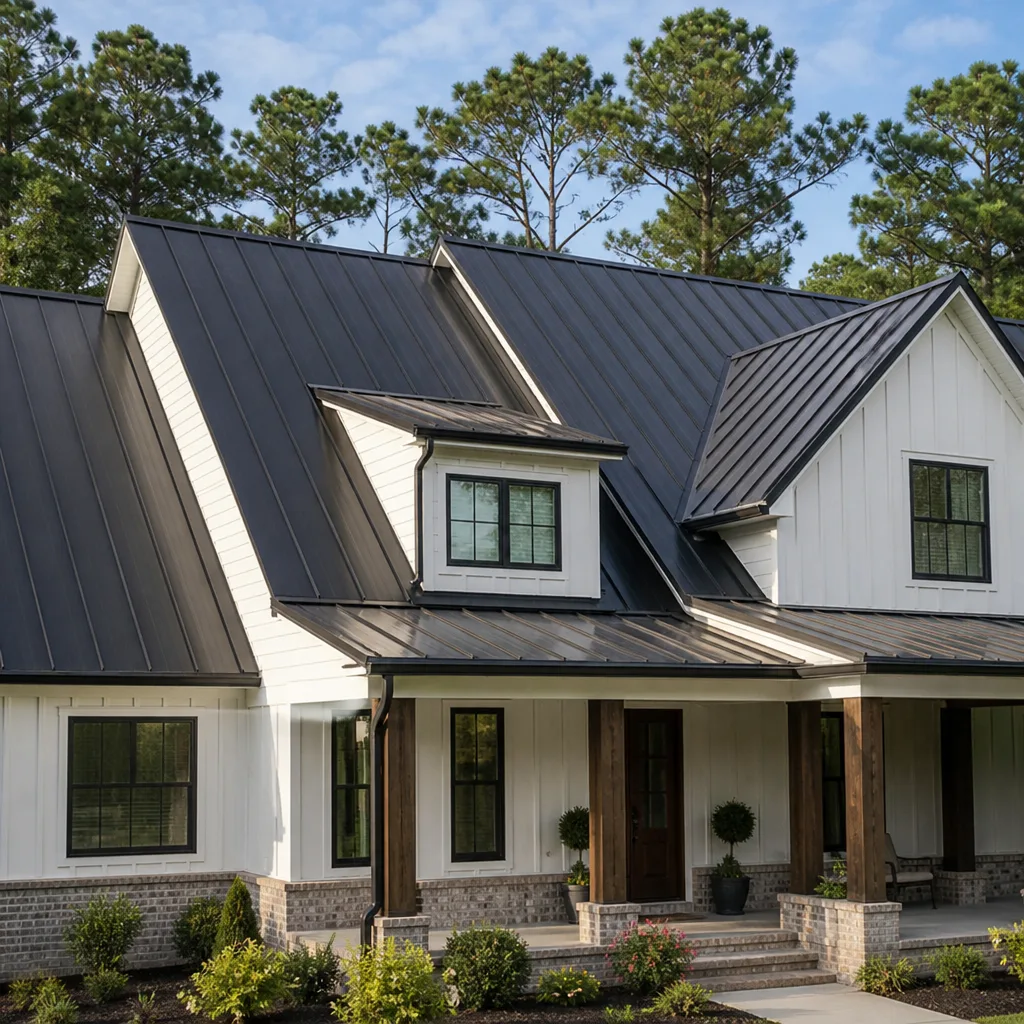 Metal roofing
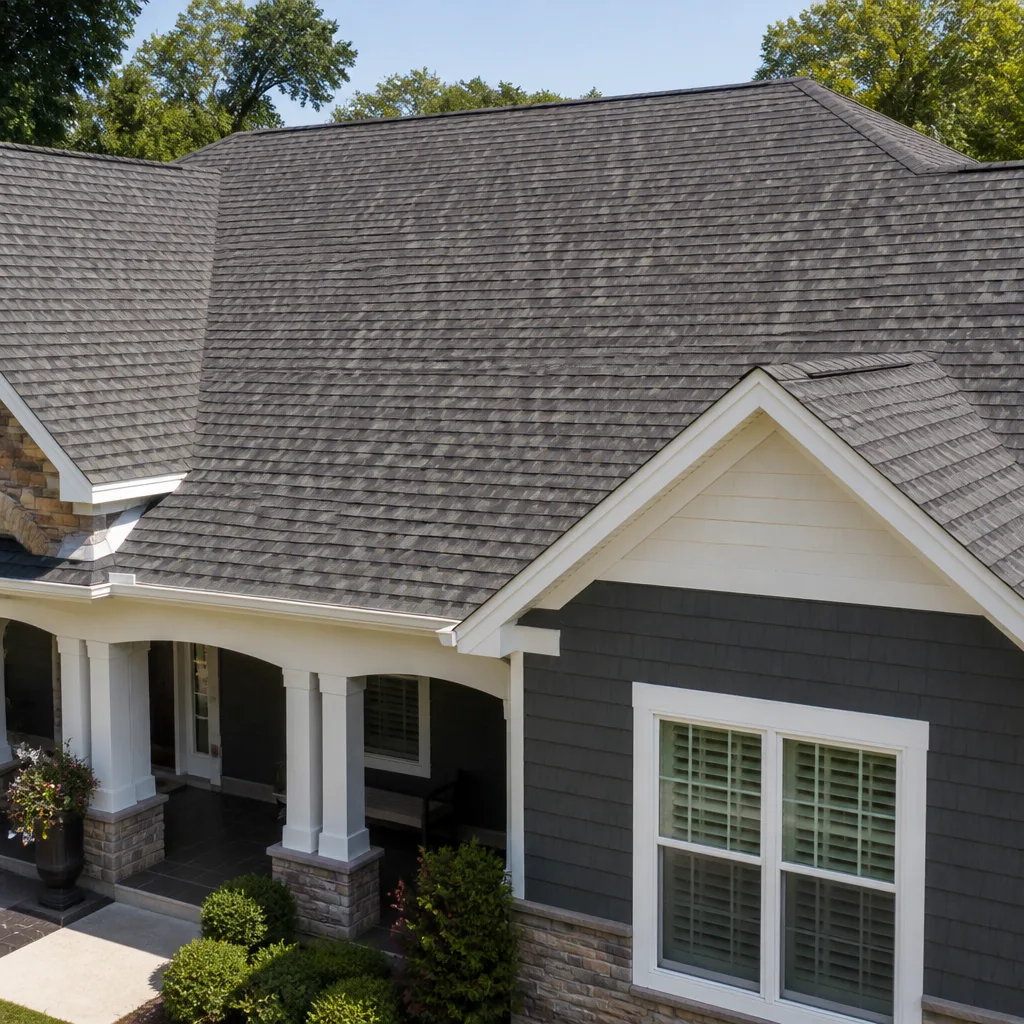 Architectural shingles
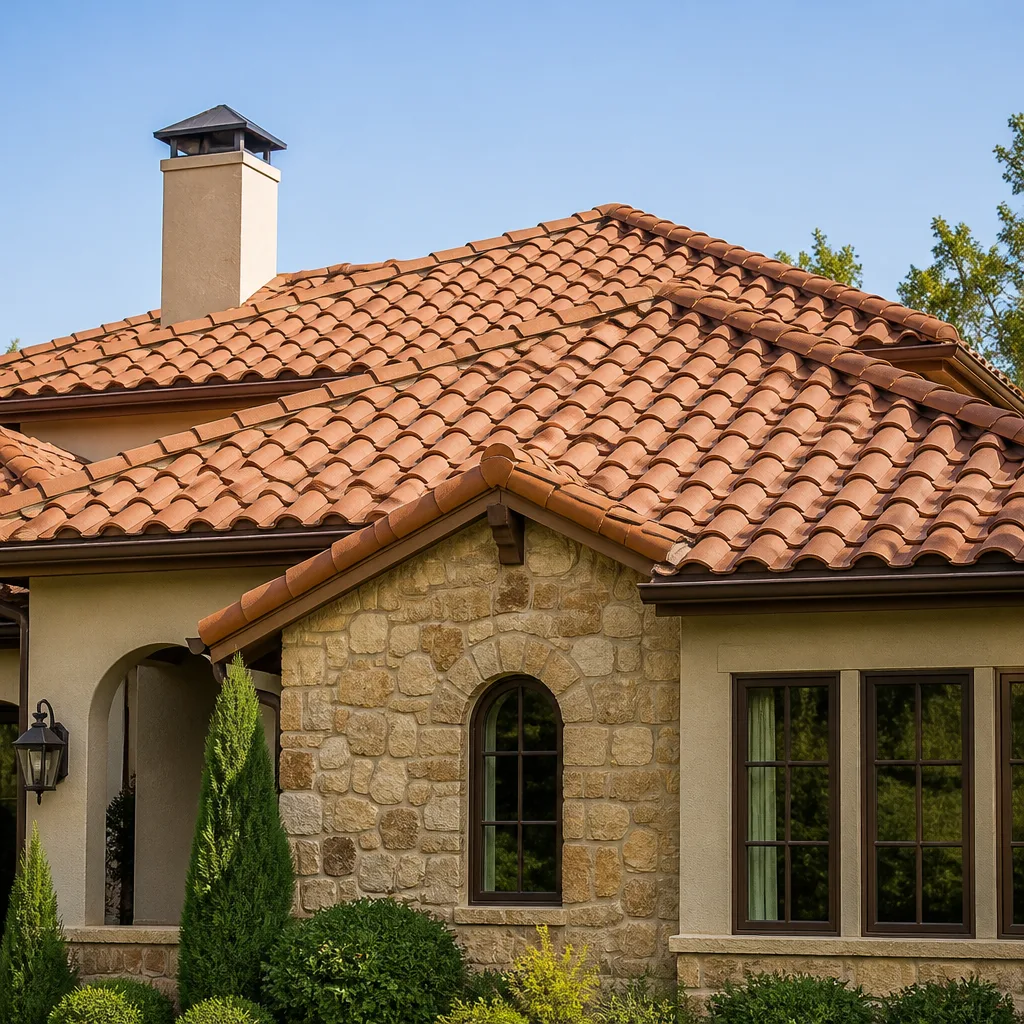 Tile roofing
 GAF
GAF Owens Corning
 Flat & low-slope
Free roof inspection with deck photos before we talk money - GAF and Owens Corning certified installation
DIY vs Professional Roofing: The Fort Worth Homeowner’s Decision Guide
Texas statute allows a homeowner to reroof their own house without holding a contractor’s license. That fact gets passed around Fort Worth barbecue joints and Nextdoor threads like a winning lotto tip. What gets left out of that advice is the fine print buried in manufacturer warranty documents: most shingle warranties from Owens Corning, GAF, and CertainTeed require installation by a certified applicator, and a DIY re-roof can void that warranty before the first spring hailstorm rolls through Tarrant County. This guide walks through what Texas law actually says, what your insurance adjuster will look for after a claim, and which repairs a careful Fort Worth homeowner can genuinely handle without calling a roofer.
Quick Answer
For a Fort Worth homeowner, DIY roofing is legally possible for minor repairs like replacing a single tab shingle or reattaching a gutter strap, but it is not wise for anything involving the roof deck, flashing, or a full replacement. The three risks that make professional installation the rational choice in North Texas are insurance claim validity, manufacturer warranty voidance, and the serious injury exposure of working on a pitch above 4:12 without fall protection, which Texas OSHA treats as a workplace hazard even when the worker is also the homeowner. Most Fort Worth homeowners in the 30 to 50 age bracket with kids and pets end up calling a licensed professional after one honest look at those three risks, and our How to Hire a Roofing Contractor in Fort Worth: A Step-by-Step Guide can help you choose the right one.
Styles & brands we work with
Table of Contents
- What Texas Law Actually Says About DIY Roofing
- The Warranty Void That Nobody Mentions
- Repairs a Careful Fort Worth Homeowner Can Actually Handle
- Repairs That Look Easy But Carry Real Risk
- The Fort Worth Permit Question for DIY Work
- The Real Cost Comparison: Labor Savings vs. What You Lose
- How DIY Work Affects Insurance Claims in North Texas
- Common Mistakes to Avoid
What Texas Law Actually Says About DIY Roofing
Texas does not require a state-issued roofing license for residential roofers. That surprises people moving to Fort Worth from states like Florida or California, where licensing is strict. The Texas Department of Licensing and Regulation does not regulate roofers at the state level, and municipalities in Tarrant County handle permitting and contractor registration on their own terms. What this means in practice: a homeowner in the Ryan Place or Berkeley Place neighborhoods can legally strip shingles, replace decking, and install a new roof on their own house without a contractor’s license. No state agency stops them.
The liability line, however, sits exactly where Texas OSHA draws it. Under the Texas Occupational Safety and Health Administration’s fall protection standards, anyone working at heights of six feet or more in a construction context must use fall protection. That rule was written for employers and workers, but the Texas Supreme Court has held that OSHA standards can establish the standard of care in negligence cases. If a homeowner injures themselves doing roof work, their health insurance carrier can investigate whether the work was performed without required fall protection. If a neighbor or friend helps and gets hurt, the homeowner’s liability exposure is real, because homeowners insurance generally excludes injuries to workers on the property when the worker is performing construction tasks for compensation, but the line blurs when the helper is unpaid and the injury claim goes through medical payments coverage or a personal lawsuit. A Fort Worth homeowner who reroofs their own house is effectively running an unregistered construction site with themselves as the sole worker and sole safety officer.
The other legal dimension is disclosure. If you sell your home after doing unpermitted roof work, you must disclose that fact on the Texas Seller’s Disclosure Notice. A buyer who later discovers an unpermitted reroof can claim non-disclosure and pursue damages. In a hot Fort Worth real estate market, that disclosure can knock five figures off a negotiated price. The Roofing Company in Fort Worth that pulls the permit and passes the inspection gives the next owner a paper trail that closes that gap.
The Warranty Void That Nobody Mentions
Here is the paragraph every Fort Worth hardware store shingle display should carry in bold lettering. Owens Corning’s standard limited lifetime shingle warranty requires installation by a contractor certified through the Owens Corning Roofing Contractor Network to qualify for the full coverage tier. GAF’s Golden Pledge warranty, the one that covers workmanship for 25 years, can only be issued by a GAF Master Elite or Certified contractor, and the installation must pass two GAF inspections. CertainTeed’s SureStart PLUS extended warranty similarly requires installation by a CertainTeed credentialed contractor and a post-installation inspection. When a homeowner installs shingles themselves, the manufacturer’s warranty is reduced to the bare minimum material warranty, or voided entirely, depending on the manufacturer and the failure mode.
In Fort Worth, that warranty distinction matters more than in most cities. Hail events hit Tarrant County with regularity, and a warranty-backed installation means the manufacturer has a financial stake in the roof’s performance after the first storm season. A DIY roof that fails after two hail seasons is the homeowner’s problem alone. We have walked Fort Worth roofs in Wedgwood and Ridglea Hills where DIY shingle jobs failed within three years, not because the homeowner lacked skill, but because the installation lacked the ventilation and fastening pattern that the manufacturer’s wind warranty requires, which a professional would have caught using a Roofing Company Maintenance Checklist for Fort Worth Homeowners. The materials were fine. The warranty was gone.
The certification tier also travels with the house. If you sell your Fort Worth home, some manufacturer warranties transfer to the next owner when the installation contractor files the paperwork. A DIY installation has no contractor to file that transfer. The warranty dies at closing. For a roof that costs $18,000 to $25,000 to replace in Fort Worth’s current market, that intangible loss is worth thousands alone.
Repairs a Careful Fort Worth Homeowner Can Actually Handle
Not everything on a roof requires a professional. Some repairs are genuinely within reach for a Fort Worth homeowner who owns a ladder, a hammer, and a healthy respect for gravity. The key is staying within the safety envelope: flat to low-slope sections, work you can do from a ladder rather than standing on the roof deck, and projects that do not touch the deck or the underlayment.
Here is a practical list of DIY-appropriate roof tasks for a North Texas home:
- Single tab shingle replacement. If one tab shingle has torn or blown off after a storm, and the surrounding shingles are intact, a careful homeowner can slide a replacement tab into place, fasten it with roofing nails, and seal the nail heads with roofing cement. Stay on a ladder, reach up under the lifted tab, and do not step on the roof.
- Gutter reattachment. Tarrant County spring storms pull gutters loose from fascia boards. Reattaching a gutter strap or re-securing a gutter bracket from a ladder is straightforward. Just use exterior-grade screws designed for fascia attachment, not drywall screws, and inspect the fascia board for rot while you are up there.
- Attic ventilation addition. A solar-powered or passive roof vent installed near the peak is doable for a homeowner who feels comfortable cutting a clean hole. It is still roof surgery, but it is the least invasive kind. Check the Fort Worth building code for required net free vent area before you cut.
- Debris removal. Branches, leaves, and dead ball moss, which does appear in Fort Worth’s older oak canopies, can be removed from the roof surface with a leaf blower from a ladder. Never power-wash shingles. That strips the granule layer and shortens the roof’s life.
- Flashing sealant refresh. Where pipe boots and chimney flashing meet the shingles, a bead of high-quality exterior sealant can extend the life of aging flashing by a season or two. This is the duct tape of roof maintenance, but it is honest duct tape.
- Roof inspection from the ground. Binoculars and a slow walk around the house can identify missing shingles, lifted flashing, and granule buildup in gutters, all early warning signs that a professional should then evaluate up close.
The common thread: these tasks do not require standing on the roof deck for extended periods, and none of them involve cutting into the roof membrane that keeps Fort Worth’s July thunderstorms out of your living room. If the job requires a harness, it is the wrong job for DIY.
Repairs That Look Easy But Carry Real Risk
Some roof repairs are deceptively simple from the ground and genuinely dangerous from the roof, especially on the steeper slopes common to Fort Worth’s Craftsman bungalows in Fairmount and Arlington Heights. A 4:12 pitch, which is the OSHA threshold where fall protection becomes a serious concern, does not look steep from the street. It feels steep when you are on it, holding a nail gun, on a July afternoon when the shingle surface temperature in Fort Worth can climb above 140 degrees.
Repairs that should always go to a professional:
- Full shingle replacement over any area larger than a few square feet. Once you strip to the deck, you have exposed the house to the elements, and North Texas weather changes fast. A professional crew tarp-weathers the job and can dry in a roof in a single day. A solo homeowner cannot.
- Valley and chimney flashing replacement. Step flashing, counter flashing, and valley flashing are where roof leaks are born. Getting the lapping direction right matters. One backwards lap and the next Fort Worth downpour finds the gap. This is precision metalwork, not shingle slapping.
- Decking repair or replacement. If you see rot or sagging decking beneath the shingles, a professional must evaluate the structural implications. Rotted decking in Fort Worth homes with older ventilation systems is common, and replacing it means working from the attic while someone else works from the roof.
- Skylight resealing or replacement. Skylights fail at the flashing, not the glass, and the flashing detail is the most leak-prone joint on any roof. Most skylight manufacturers will not honor warranty claims unless the installation was handled by a credentialed professional.
- Any work on a roof pitch above 6:12. These are the roofs where a fall is likely, not just possible. Fort Worth has thousands of them in neighborhoods like Mistletoe Heights and Park Hill. The hospital bill from a roof fall dwarfs any professional quote.
- Anything involving the roof-to-wall junction. Where the roof meets brick or siding, the flashing detail interacts with the wall system. Getting it wrong leaks into the wall cavity, and by the time the stain shows on the ceiling, the framing has been wet for months.
The roof is a system, not a surface. When you remove a shingle, you are not just replacing that shingle; you are interacting with the underlayment, the fastening schedule, the ventilation balance, and the flashing envelope. A professional handles all of those at once. That is why, in our experience on Fort Worth roofs across neighborhoods like Wedgwood East and Overton Park, the DIY repairs that fail are rarely the shingle work itself. They fail at the seams: where the shingle meets the flashing, where the flashing meets the chimney, where the deck meets the fascia. Those seams are the roof’s true job.
The Fort Worth Permit Question for DIY Work
Fort Worth requires a building permit for roof replacement and for structural roof repairs, including decking replacement. The City of Fort Worth Development Services Department processes roof permits, and a homeowner can pull their own permit as an owner-builder under Texas law. The city cannot deny a homeowner the right to pull a permit on their own home. What the city does ask is that the homeowner demonstrate compliance with the International Residential Code as adopted by Fort Worth, including fastening requirements, underlayment requirements, and ventilation requirements.
The inspection process for an owner-builder roof in Fort Worth works like this:
- Pre-construction. The homeowner requests a roof permit through the Fort Worth Accela Citizen Access portal or in person at City Hall. Most roof permits are issued same day or next day if the scope is straightforward.
- Mid-roof inspection. The city inspector comes out after the old roof is stripped and before shingles go on, to approve the decking, underlayment, felt details, and dry-in. If the deck has soft spots, the inspector flags them. If the underlayment overlaps wrong, the inspector fails you right there.
- Final inspection. After shingles are installed, the inspector checks the ridge cap, flashing details, drip edge, and ventilation. This is where DIY jobs most often fail. The inspector walks the roof with a checklist, and an untrained eye does not catch the details the checklist targets.
A failed inspection in Fort Worth does not just mean a re-inspection fee, though that fee is real. It means the job stops. The homeowner cannot legally occupy the home as though the roof is done, their insurance company is notified that a permit exists but is not closed, and the clock runs. In a city where spring hail season can arrive in March, a stalled DIY permit in April is a very bad position. A professional Roof Replacement in Fort Worth crew that has passed hundreds of Fort Worth roof inspections knows exactly what the inspector will check, because they have seen the fail list before. That experience is not about skill. It is about repetition. It is hard to repeat an inspection checklist once every ten years and pass it the first time.
The Real Cost Comparison: Labor Savings vs. What You Lose
A DIY re-roof in Fort Worth can save between $8,000 and $15,000 in labor costs, which is the number that drives most homeowners toward the ladder, but see our Roofing Cost Breakdown: The Fort Worth Homeowner’s Reference for 2026 for the full picture. That is real money. Before you commit to the savings, though, the math needs the invisible costs added back in. These are the costs that do not appear on a materials receipt at the Fort Worth Home Depot, and they are the ones that define whether the savings were real.
Here is the honest cost sheet, for a typical 2,200 square foot single-story Fort Worth ranch with a 5:12 pitch:
- Materials cost (DIY or pro, the same bill): $6,000 to $9,000 for a mid-grade architectural shingle package, underlayment, drip edge, fasteners, ridge vent, and flashing. This is the same whether a homeowner or a professional buys it, though a professional usually has contractor pricing that knocks 10 to 15 percent off.
- Labor cost (professional only): $7,000 to $12,000 depending on tear-off complexity, pitch, and crew size. This is the number that disappears in a DIY scenario.
- Cost you lose in a DIY job, item one: manufacturer warranty. Value: $3,000 to $6,000. A full warranty-backed Owens Corning or GAF installation covers material defects for decades and, on the top tiers, workmanship for 25 years. A DIY install gets the base material warranty at best. That lost coverage has a cash value.
- Cost you lose, item two: written labor warranty. Value: $1,000 to $3,000. When a professional Fort Worth roofing company issues a written labor warranty on the installation, that warranty is a contract. If a seam opens two years later, the contractor returns and fixes it. A DIY roof has no labor warranty, because the labor was your own.
- Cost you lose, item three: clean-up and disposal. Value: $400 to $900. A full tear-off produces thousands of pounds of shingle debris. A professional crew hauls it, including the nails that end up in the flower beds and driveway. A DIY homeowner rents a dumpster, takes a weekend, and still finds nails in the yard three months later. The Birchbark Roofing Fort Worth home team goes a step further: shoe covers at the door, drop cloths through the hallway, and a photo of the completed clean-up before the crew leaves.
- Cost you lose, item four: the value of a completed permit and inspection record. Value: $800 to $2,500 at resale. A closed permit from the City of Fort Worth tells a buyer and their lender that the roof was done correctly. An unpermitted or incomplete permit is a disclosure obligation and a negotiation weakness.
- Cost you lose, item five: time. A professional crew tears off and reroofs a 2,200 square foot home in two to three days in good weather. A solo DIY homeowner working nights and weekends in Fort Worth takes four to eight weeks. During that entire window, the house is exposed to whatever weather North Texas decides to throw, and the homeowner is not earning income or spending time with family.
When the invisible costs are added up, the DIY savings shrink from $8,000 to $15,000 down to something closer to $2,000 to $4,000, and that is before you price in the cost of a single emergency room visit for a fall, or the cost of repairing water damage from a leak that opened during the four-week DIY window. The question stops being “Can I save money doing it myself?” and becomes “Is $2,000 to $4,000 worth four to eight weeks of weekends, a ladder, and a voided manufacturer warranty?” For most Fort Worth homeowners, the answer is no.
How DIY Work Affects Insurance Claims in North Texas
North Texas is hail country. Fort Worth roofs get hit. When that happens, the homeowner files a claim, and an adjuster comes out to assess the damage. What that adjuster finds matters more than what the homeowner thinks they installed. Texas insurance law requires the insurer to pay for repair or replacement of covered damage, and insurers routinely deny claims when they find evidence of improper installation, because improper installation is a maintenance issue, not a covered peril. If the roof was DIY-installed and the fastening pattern does not meet the shingle manufacturer’s published installation spec, the adjuster has a written basis to deny the claim or reduce the payout. The burden of proof is on the homeowner to show that the roof was installed to spec, and a DIY homeowner has no installer’s documentation to offer.
There is a second angle that Fort Worth homeowners rarely consider: the insurance policy itself. Some Texas home insurance policies contain clauses requiring that roof work be performed by a licensed professional in order for the roof to remain fully covered. Read your declarations page. That clause is more common in newer policies written after the 2019 to 2022 hail loss cycle in North Texas, and it is a policy-level trap that a DIY roof trips immediately. We have seen Fort Worth policyholders in North Hi Mount and Westcliff who discovered this clause only after a storm, when the claim was already filed and the adjuster was already on the ladder. The conversation at that point is not a negotiation. It is a denial letter in process.
The insurance lesson for Fort Worth homeowners is this: even if you complete a technically perfect DIY roof, the absence of professional documentation can still cost you the claim. Insurers protect themselves with paperwork. A professional installation generates the paperwork: permit, inspection record, manufacturer certification, contractor invoice, warranty registration. A DIY installation generates none of that. When the next Fort Worth hailstorm hits, the homeowner with professional documentation gets paid. The homeowner without it goes to appraisal or walks away. That asymmetry is not about roofing skill. It is about the claims process, and the claims process runs on paper.
Making the Decision: A Framework for Fort Worth Homeowners
The Fort Worth-specific variables that should drive your decision are climate, code, and time horizon. Here is a simple decision framework that works for most North Texas homes.
Choose DIY when all of the following are true:
- The repair is on the list of DIY-appropriate tasks above: single shingle, gutter strap, sealant refresh.
- You can do the entire job from a ladder without standing on the roof deck.
- The repair does not touch the underlayment, decking, flashing, or any roof seam.
- You are willing to accept that no warranty applies to your work.
- The roof’s age is under ten years, and the repair is isolated to one spot.
Choose professional when any of the following is true:
- The work involves tear-off, decking, flashing, valleys, skylights, or anything on a pitch above 6:12.
- The roof is over ten years old and the repair is in a load-bearing area.
- You want the manufacturer warranty to actually protect you.
- You plan to file an insurance claim now or in the future.
- You plan to sell the home within ten years.
- You have kids and pets in the house during the project, and you want the job done in days, not months.
- You value a written price before work starts, a warranty that is stamped on the job, and a clean-up photo before the crew leaves. Birchbark Roofing Fort Worth offers all three on every job, along with the 365-Day Done Right Promise: if the work is not done right, we make it right.
That last point deserves emphasis. The reason to hire a professional is not that you lack the skill. Some Fort Worth homeowners we have met could absolutely finish a clean reroof if they had a month of weekends and no weather. The reason to hire a professional is that a professional is accountable in ways a homeowner never can be. A written warranty. A completed permit. A manufacturer certification that activates a real warranty. A baseline clean-up standard that protects the floors and the flower beds. When you do it yourself, none of that exists. And in Fort Worth, where the next hailstorm is always a season away, those accountability layers are the difference between a roof that protects the house and a roof that protects no one but the person holding the ladder.
What “Hiring a Professional” Should Actually Include in Fort Worth
Not every professional roofing company in Fort Worth operates the same way. The bar varies widely, and homeowners who assume all contractors are equal end up surprised. Here is what to verify before you sign anything, with the specifics that matter most for a North Texas home.
Checklist for vetting a Fort Worth roofing contractor:
- Written price before any work starts. This should be a line-item price in dollars, delivered before you agree to anything. A verbal estimate is not a written price. A Fort Worth roofer who will not put the number in writing before work begins is signaling that the number can change. Birchbark Roofing Fort Worth includes a written price on every job, no exceptions, and it is always provided before work starts, never negotiated away.
- Manufacturer certification. Ask which manufacturer the contractor is certified with. Owens Corning, GAF, and CertainTeed each run certification programs with different tiers, and the tier determines which warranty the contractor can issue. A contractor who cannot name their certification tier cannot issue the warranty that actually protects you.
- Permit handling. The contractor should pull the Fort Worth permit, schedule the inspections, and close the permit. If the contractor suggests skipping the permit to save time or money, walk away. That suggestion puts the entire roof’s legal status at risk and creates a disclosure problem when you sell.
- Clean-up protocol. A professional crew protects the home during the job: shoe covers at the door, drop cloths through the hallways, tarps under the work areas, and a full magnet sweep for nails afterward. Ask for the clean-up protocol in writing. At Birchbark Roofing Fort Worth, we photograph the completed clean-up before the crew leaves, so there is no question about what the yard looked like when the trucks pulled away.
- Warranty terms in writing. The 365-Day Done Right Promise from Birchbark Roofing Fort Worth is stamped on every job: if the work is not done right, we make it right. That is a one-year blanket guarantee, in writing, covering every roof repair and replacement we perform. Ask any other contractor to match that in writing.
- Who answers the phone. Call the company outside business hours once. If you get a voicemail tree, note that. At Birchbark Roofing Fort Worth, a live person answers every call, 24 hours a day, 7 days a week, including nights and weekends. When a roof is leaking at 9 p.m., that difference is everything.
These six checks take an hour of your time and protect you for the life of the roof. Fort Worth homeowners who skip them end up with a roof installed by a subcontractor they never met, a warranty that exists only in a sales pitch, and a permit that was never pulled. The Roof Repair in Fort Worth market has plenty of honest operators and a handful who are not. The written price, the warranty in writing, and the clean-up photo are the three signals that separate them.
Common Mistakes to Avoid
- Assuming “no license required” means “no standards apply.” Texas does not require a state roofing license, but Fort Worth requires a permit and an inspection for re-roofs, and OSHA fall protection standards still apply as the legal standard of care. Skipping those is not a shortcut; it is a liability creation.
- Buying shingles from a big-box store and assuming the manufacturer warranty applies. It does not, at least not at the coverage tier you are imagining. The full warranty requires certified installation. The shingles know nothing about your good intentions.
- Working on a Fort Worth roof in July without understanding surface temperature. Shingle surfaces in a Texas summer can exceed 140 degrees. That heat softens shingle adhesive and makes footing unstable. A simple repair in April becomes a heat emergency in August.
- Starting a tear-off without weatherproofing the deck the same day. Fort Worth’s weather can flip from clear to severe in an afternoon. An uncovered deck at 5 p.m. is a swimming pool by 8 p.m. A professional crew dries in before leaving. A solo homeowner cannot always do the same.
- Skipping the permit because “it is my own house.” Your house, your rules, but the permit issue follows the house when you sell. Buyers and their lenders check permit records. An unpermitted roof is a bargaining chip for the buyer’s agent and a disclosure burden for you.
- Thinking the insurance company will not check the installation history. Adjusters check. When a hail claim comes in on a roof that shows improper installation, the claim gets denied or reduced. The DIY savings evaporate in the claims process, sometimes years after the work was done.
- Hiring the cheapest Fort Worth roofer without checking certification, warranty terms, and clean-up protocol. The cheapest quote often signals a crew without manufacturer certification, without a real warranty, and without a clean-up plan. That is not savings. That is a transfer of risk from the contractor to you.
See the difference
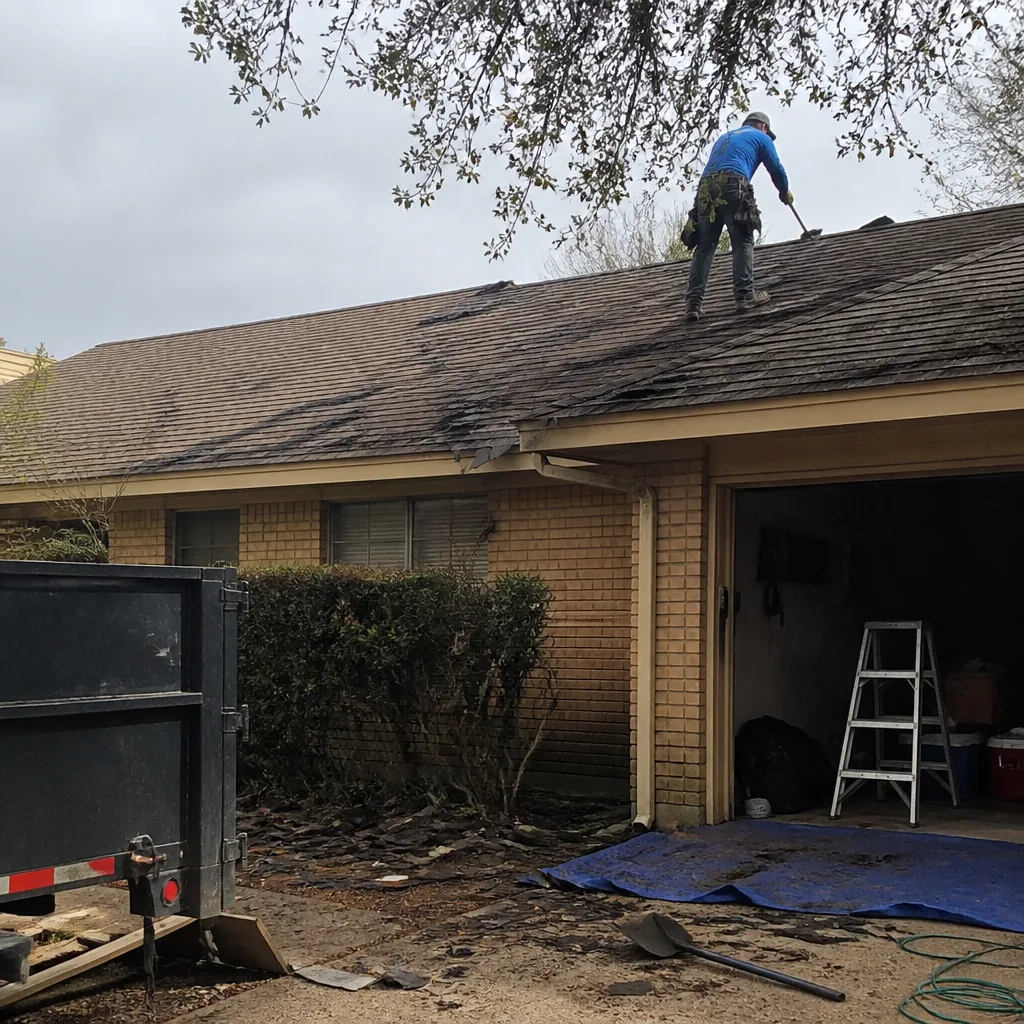 Before
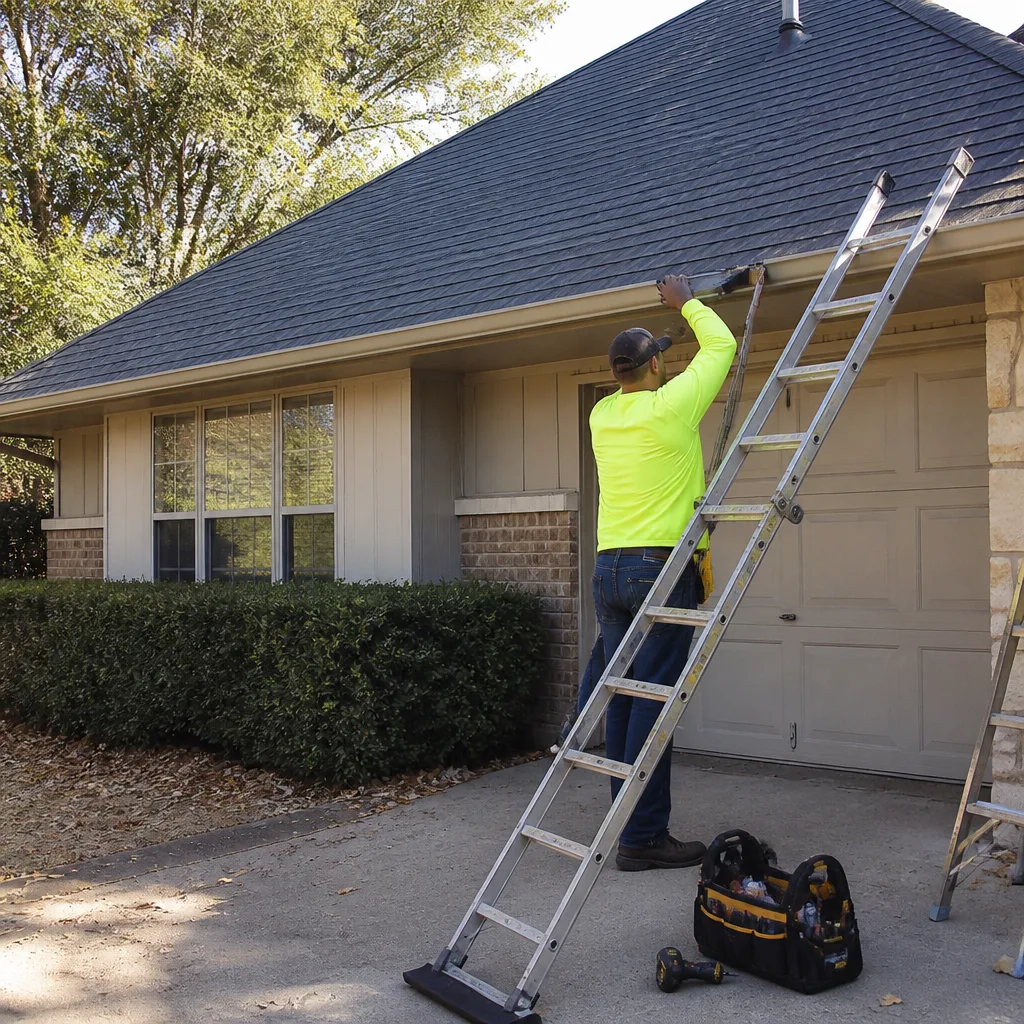 After
After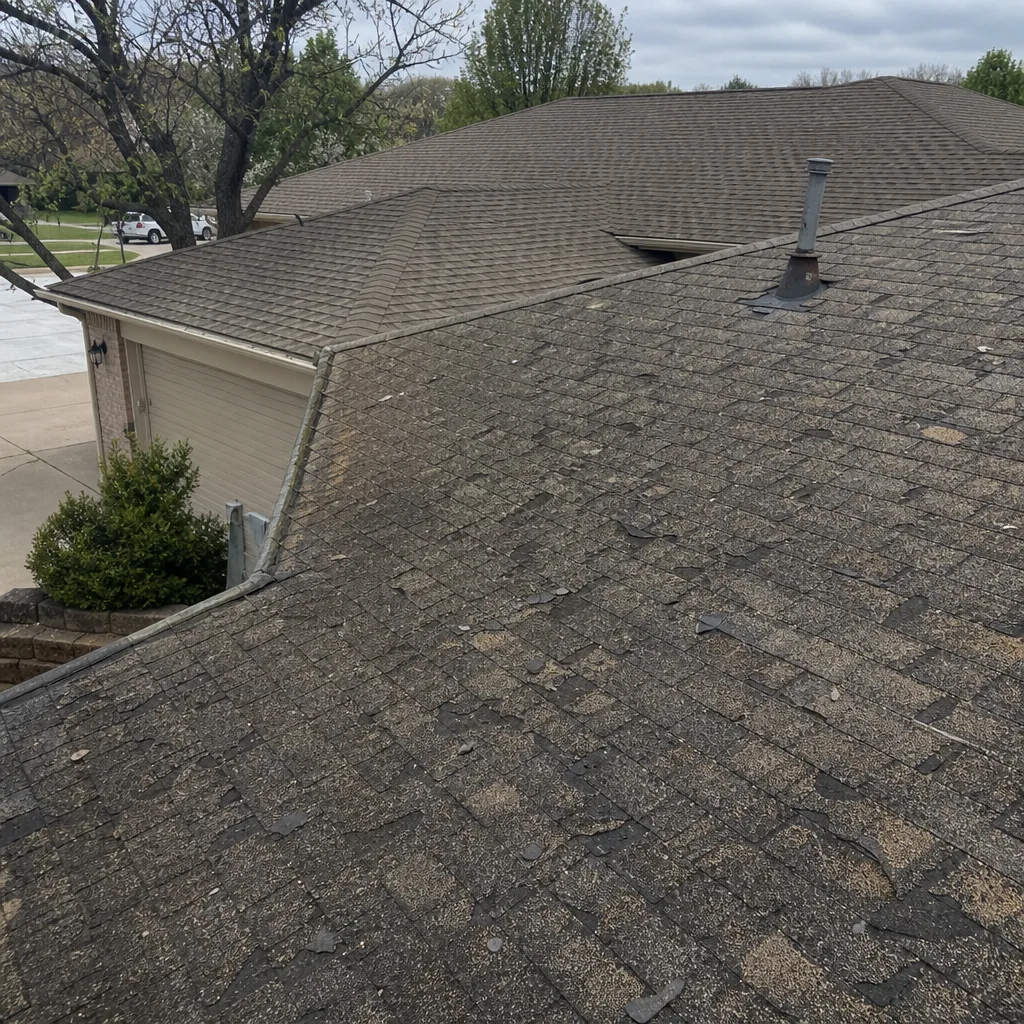 Before
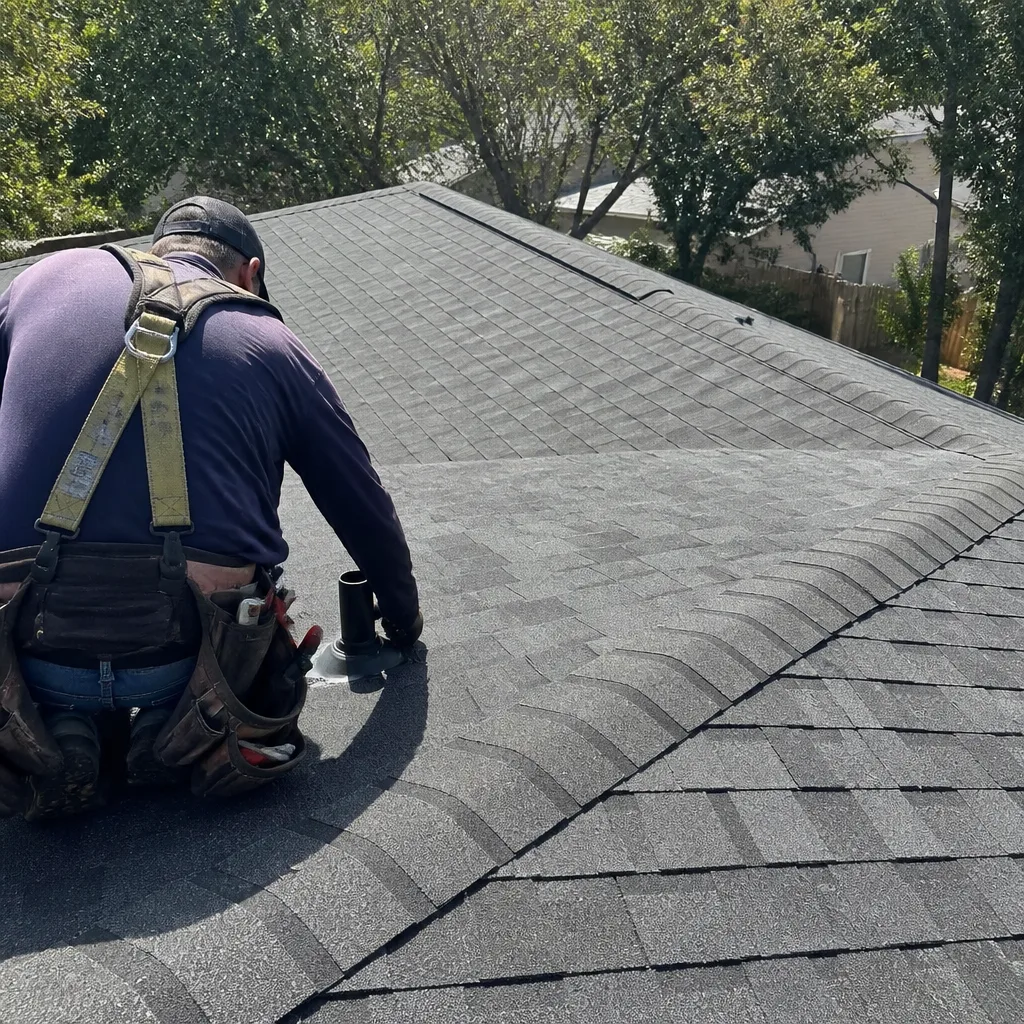 After
After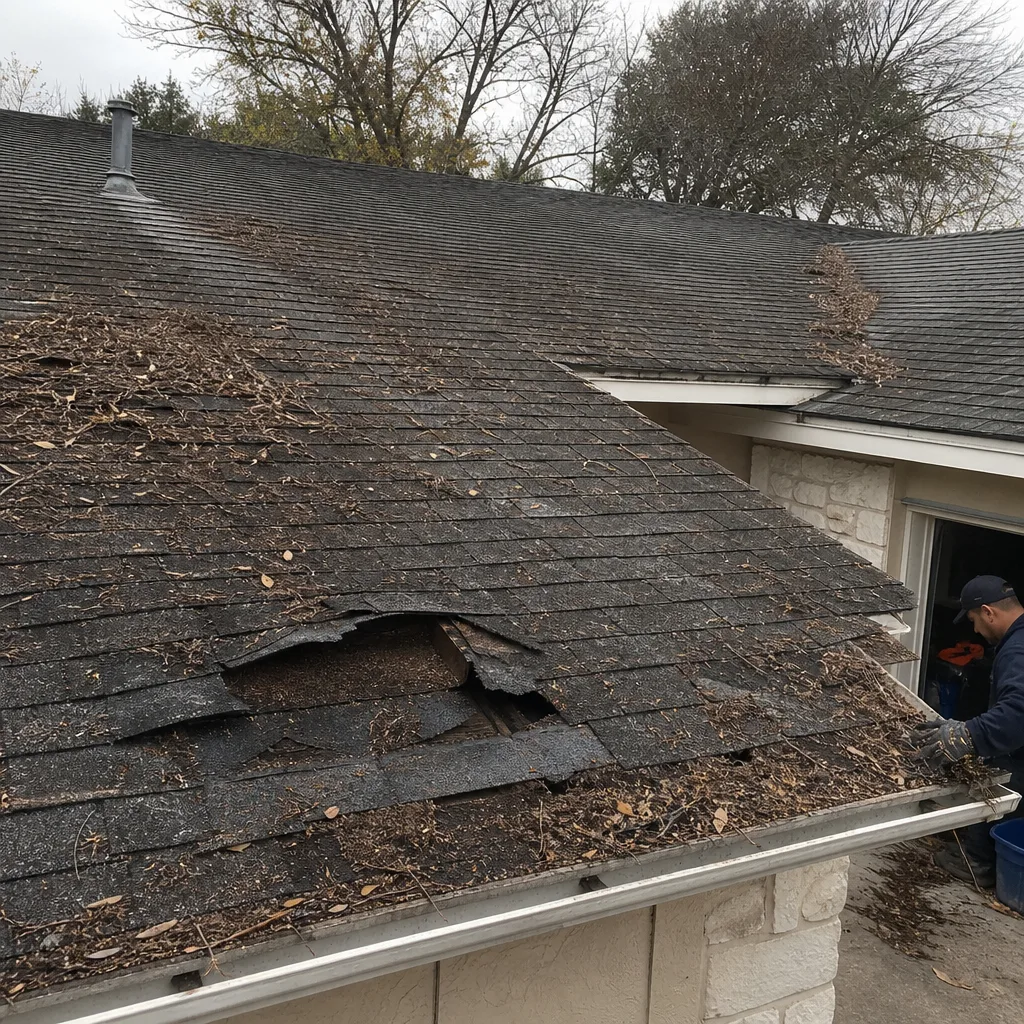 Before
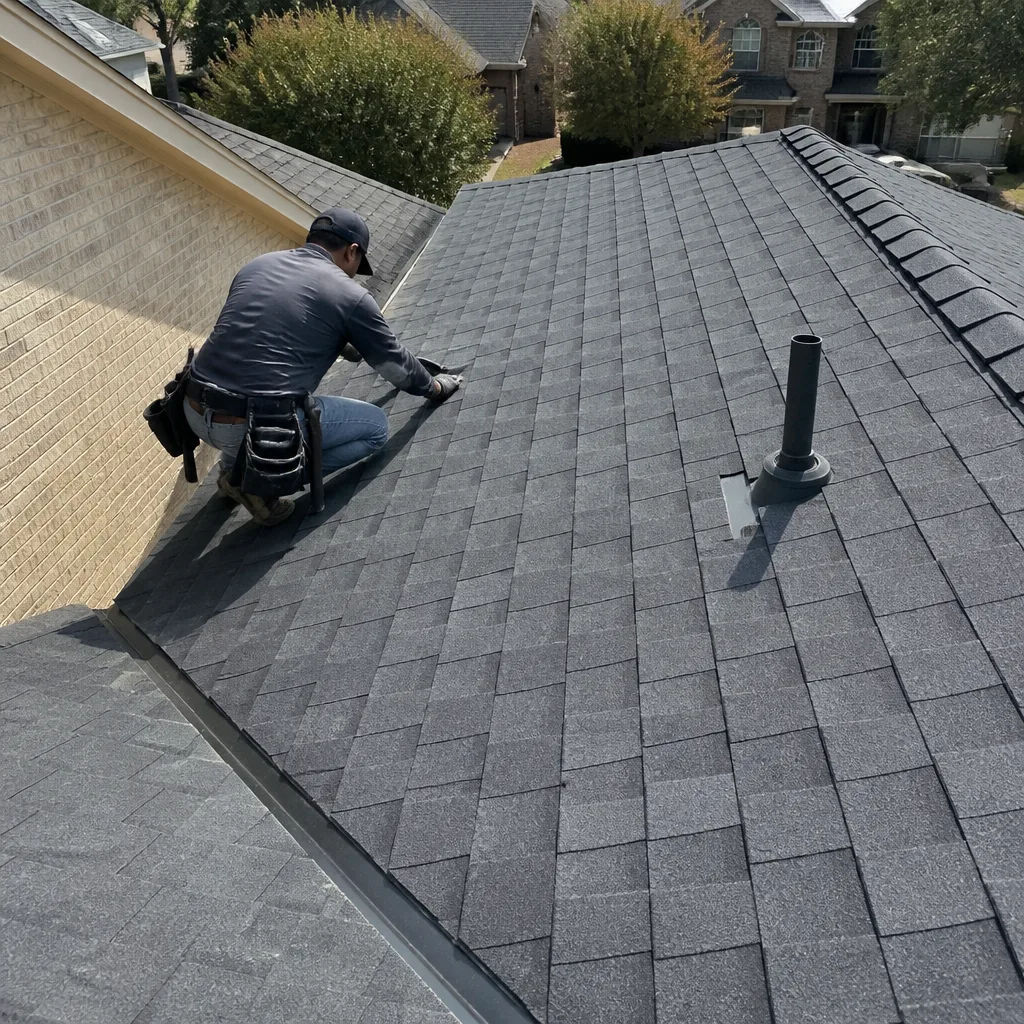 After
AfterWhen to Call a Professional
Call a professional roofer when the job involves tear-off, decking, flashing, or anything on a roof pitch that makes you think twice about climbing up there, and explore our more guides & resources to prepare for the conversation. Call a professional when the roof is older than ten years, when you plan to sell the home, when a warranty matters to you, or when an insurance claim is on the table. Call a professional when you have kids and pets in the house and you do not want a month of tarps, ladders, and construction debris in the backyard. Birchbark Roofing Fort Worth offers free estimates in Fort Worth, serves the entire Tarrant County area, and every job includes a written price before work begins, shoe covers and drop cloths on every visit, background-checked and uniformed technicians on the roof, and a photo of the completed clean-up before we leave. Call (682) 990-0964 to schedule your free estimate, and a live person will answer, day or night.
Frequently Asked Questions
Yes, Texas law allows a homeowner to reroof their own home without a contractor’s license, and Fort Worth allows owner-builder permits for roof work. The catch is that the work must still meet Fort Worth building code, pass inspection, and comply with OSHA fall protection standards as the legal standard of care. A homeowner who skips the permit creates a disclosure problem when selling the home, and a homeowner who skips fall protection creates a serious injury risk.
In most cases, yes. Owens Corning, GAF, and CertainTeed all condition their full warranty coverage on installation by a certified contractor, and a DIY installation typically voids the warranty entirely or drops it to a bare material warranty. In Fort Worth, where hail claims are common, losing that warranty coverage means losing a layer of protection that a professional installation includes automatically. Call (682) 990-0964 for an exact quote on a warranty-backed installation, estimates are free.
A full professional roof replacement on a typical 2,200 square foot single-story Fort Worth home costs between $13,000 and $21,000, while a DIY job on the same house runs $6,000 to $9,000 in materials. When warranty value, permit closure, clean-up, and resale value are added back, the true DIY savings typically shrink to $2,000 to $4,000. The best way to know your exact number is to call (682) 990-0964 for a written price before any work starts.
Minor repairs that do not involve structural changes, decking replacement, or full re-roofing generally do not require a permit in Fort Worth. Full roof replacement and any structural work, including decking repair, do require a permit and inspection through the City of Fort Worth. A professional contractor handles the permit and inspections as part of the job, and that paper trail protects you at resale.
Single tab shingle replacement, gutter reattachment, sealant refresh on flashing, attic ventilation addition, and debris removal are all within reach for a careful homeowner working from a ladder. Anything involving the roof deck, flashing replacement, valleys, skylights, or a pitch above 6:12 should go to a professional. Even for DIY work, wear appropriate shoes, work with a partner, and never get on the roof during or after rain.
Yes, Birchbark Roofing Fort Worth works with materials from GAF, CertainTeed, Owens Corning, IKO, Atlas, Tamko, and Boral, which means we can match the existing shingle profile and activate the manufacturer warranty tier that fits the job. Every installation includes a written price before work starts, a clean-up photo before the crew leaves, and the 365-Day Done Right Promise. Call (682) 990-0964 to talk through your options.
The Bottom Line
The DIY roofing decision in Fort Worth comes down to three questions. Do you want a manufacturer warranty that actually covers the shingles? Do you want a completed permit and inspection record when you sell? Do you want the liability of working on a roof pitch above 4:12 with no fall protection and no one to call if something goes wrong? If you answered no to all three, the professional route is not the expensive option. It is the inexpensive insurance policy. Birchbark Roofing Fort Worth has served Fort Worth since 2000 as part of the Cedarwell family of roofing companies, and every job carries the 365-Day Done Right Promise in writing. For homeowners with kids and pets who care about the floors as much as the roof, that written guarantee is the whole point. Call (682) 990-0964 and a live person will answer, 24 hours a day, 7 days a week.
Written by Erik Lindgren, Owner at Birchbark Roofing Fort Worth, serving Fort Worth since 2000.