
Last updated October 17, 2026
 Metal roofing
 Architectural shingles
 Tile roofing
 GAF
GAF Owens Corning
 Flat & low-slope
Free roof inspection with deck photos before we talk money - GAF and Owens Corning certified installation
Roofing Warning Signs: A Fort Worth Homeowner’s Reference Guide
A water stain on your ceiling means water has already traveled through your decking, insulation, and vapor barrier. By the time you see that stain, you’re looking at a problem that likely started during a storm 18 months ago and has been growing quietly ever since. This guide is built for one purpose: to help you catch roof problems in Fort Worth before they reach your drywall, and you can find more guides & resources on our blog. We’ll walk through the subtle signals that show up months or years before a leak becomes visible inside your home, so you can act on a $400 repair instead of a $4,000 one.
Quick Answer
The most useful roof warning signs in Fort Worth are granule accumulation in gutters and downspout elbows, lifted or curling shingle edges, fascia separation from the roofline, and dark streaks that don’t wash off. If you check these four areas twice a year, you’ll catch most problems while they’re still cheap to fix, often two or three years before water ever touches a ceiling, as covered in our Seasonal Roofing Care for Fort Worth: Year-Round Homeowner’s Guide.
Styles & brands we work with
Table of Contents
- What Granule Accumulation in Downspout Elbows Actually Tells You
- The 10-Minute Attic Inspection That Catches Leaks Before They Hit Drywall
- Why Fort Worth Clay Soil Causes Fascia Separation and What It Means for Your Decking
- How to Tell Hail Strikes From Normal Granule Wear Using a Coin Test
- The Five Flashing Locations Where Fort Worth Roofs Most Commonly Leak
- Shingle Distress Signals You Can See From the Ground
- Ventilation Failures That Destroy Shingles From Underneath
- Common Mistakes to Avoid
- When to Call a Professional
- Frequently Asked Questions
What Granule Accumulation in Downspout Elbows Actually Tells You
Granule loss is the first measurable sign that an asphalt shingle is aging. Those tiny ceramic-coated bits are the shingle’s UV shield, and when they let go, the asphalt underneath begins oxidizing within months. In Fort Worth, where summer surface temperatures on a roof can exceed 140 degrees, this happens faster than homeowners expect. The pattern of where granules collect tells you far more than the fact that some are missing.
Here’s how to read what you’re seeing:
- Corner loss: Granules concentrated at the mattress of a downspout elbow, especially after a dry spell, usually mean shingle corners are lifting and flapping. That flutter grinds granules off at the corners of each tab. It’s an early sign of nail withdrawal or shingle seal failure, not necessarily full replacement.
- Field loss: A uniform drift of granules across the bottom of a gutter means the shingle face itself is wearing down. This is normal aging, but if you’re seeing bare asphalt patches starting to show through, you’re likely in the last 3 to 5 years of functional life for a 20-year shingle in Texas sun.
- Tab edge loss: Granules piling up only along the drip edge or in gutter seams, in a repeating pattern that matches your shingle layout, often points to hail bruising from a past storm. The impact loosens granules at the leading edge of each tab, which then wash off over the following months.
When we inspect roofs in Fort Worth, we check downspout elbows before we even put a ladder against the gutter. The elbow acts as a collection point, and the pattern of granules there is often the difference between a roof with five good years left and one that should be scheduled for Roof Replacement in Fort Worth before the next severe storm season.
The 10-Minute Attic Inspection That Catches Leaks Before They Hit Drywall
You don’t need a contractor to spot an active roof problem. You need a flashlight, ten minutes, and a willingness to climb into your attic on a sunny afternoon. This inspection catches live leaks, ventilation problems, and decking softness while they’re still confined to the space above your insulation, which is exactly where you want to find them.
Here’s the step-by-step we recommend to friends and family in Fort Worth, drawn from our Complete Guide to Roofing in Fort Worth:
- Turn off the attic light and close the door. Let your eyes adjust for 30 seconds, then look for any daylight coming through the roof deck. Holes the size of a pencil eraser are visible this way and won’t show up during a casual glance with the lights on.
- Scan the decking for dark staining. Fresh leaks show as darker, damp-looking wood. Older, intermittent leaks leave gray or black water rings. If the stain is soft to the touch, the decking is already compromised and will likely need repair or replacement when the shingles come off.
- Check the underside of ridge and hip lines. Run your flashlight along where the roof peaks meet. This is the first place heat and moisture accumulate in a poorly ventilated attic.
- Look for rusted or blackened nails. In a humid Texas attic, a nail that’s wicking moisture from above will rust from the tip down. Rusted nail heads sticking through the decking are a classic early-warning sign of a small leak that hasn’t pooled yet.
- Inspect vent boots and plumbing penetrations from below. Look for water tracks running down the pipe or duct. A leak at a pipe boot often travels along the pipe itself, not straight down through the decking.
- Test the decking with a fingertip press. Gently press the plywood or OSB near any stain. If it gives more than it should, you have rot. Soft decking means a larger repair area, and you’ll want a written price before anyone opens up that section.
Most Roofing Company in Fort Worth crews start on the roof itself. We start in the attic because that’s where the earliest truth lives. An attic inspection tells you not just whether you have a problem, but how long it’s been there.
Why Fort Worth Clay Soil Causes Fascia Separation and What It Means for Your Decking
Fort Worth sits on a band of expansive clay soil that shrinks during dry months and swells after rain. This movement is the quiet force behind a roofing problem most homeowners dismiss as cosmetic: fascia separation. When the board along your roof’s edge pulls away from the roofline, it’s often because the foundation and framing have shifted just enough to flex the eaves. That movement loosens the fasteners holding the fascia board, and once the gap opens, water finds it.
Here’s what fascia separation actually signals:
- Decking edge exposure: The gap lets wind-driven rain reach the raw edge of your roof decking. Plywood edges are the most absorbent surface on a roof, and once they start wicking moisture, rot spreads inward under the shingles.
- Drip edge compromise: If the fascia separates far enough, the metal drip edge can pull away from the shingles, which allows water to curl back under the shingle edge instead of dropping into the gutter.
- Gutter pulling: Most Fort Worth gutters are screwed through the fascia into the rafter tails. A shifting fascia means gutter fasteners loosen, and the gutter pulls forward. Water then lands behind the gutter, against the fascia face, accelerating the rot cycle.
The fix is rarely just a few new nails. When we see fascia separation on a Fort Worth home, we inspect the decking edge behind the fascia before quoting any repair. About a third of the time, there’s decking edge rot that hasn’t yet shown up as an interior leak. Catching it at the fascia stage means a smaller repair and no drywall work inside the home.
How to Tell Hail Strikes From Normal Granule Wear Using a Coin Test
Fort Worth gets enough hail that insurance adjusters keep busy most springs. But not every bare spot on a shingle is a hail strike, and not every hail strike is immediately obvious. The coin test is a simple way to document what you’re seeing before you call your insurer. It works because hail impact leaves a distinctive pattern that’s different from age-related granule loss.
Here’s how to run the test:
- Grab a quarter and a piece of chalk or a grease pencil. You’ll use the quarter as a size reference in photos, and the chalk to mark anything that looks like a fresh impact.
- Look for circular bruise patterns. A true hail strike leaves a round or oval dent where the impact crushed the asphalt layer. Fresh impacts look like dark circles with exposed asphalt; older ones develop a soft brownish bruise as oxidation sets in.
- Press the flat side of the quarter against the shingle next to the mark. If the mark is roughly the size of the quarter or smaller, and it’s round with granule loss at the center, it’s likely hail. Normal wear produces irregular, larger bare patches without a defined center point.
- Check for exposed fiberglass mat. Hail often fractures the shingle enough that you can see the woven fiberglass threads at the bottom of the dent. Age-related granule loss rarely exposes the mat until the shingle is nearly done.
- Photograph everything with the quarter in frame. Document the date, the storm date if you know it, and mark the roof slope and direction in your notes. This documentation matters when the adjuster arrives.
When hail damage is significant enough to justify a claim, you want a written price in hand before an adjuster visit, not after. That way you can compare line items directly against the adjuster’s estimate. It’s one of the reasons we recommend scheduling a free estimate the same week you document the damage, rather than waiting on the insurance timeline.
The Five Flashing Locations Where Fort Worth Roofs Most Commonly Leak
Most roof leaks in Fort Worth don’t start in the middle of the field. They start at seams and transitions where the shingle system meets something else: a chimney, a pipe, a skylight, a valley, or a wall. These are the flashing locations, and each one has its own early-failure signature that homeowners can learn to spot before water reaches the ceiling.
Here’s what early failure looks like at each one:
1. Chimney Flashing
The saddle, or cricket, behind a chimney is the place water pools if it’s been built wrong or has settled. Look for step flashing that has pulled away from the brick, and for cracked caulk lines where the counterflashing meets the masonry. In Fort Worth, the freeze-thaw cycle of winter mornings followed by warm afternoons works the caulk joints loose within five years on many homes.
2. Pipe Boots and Plumbing Vents
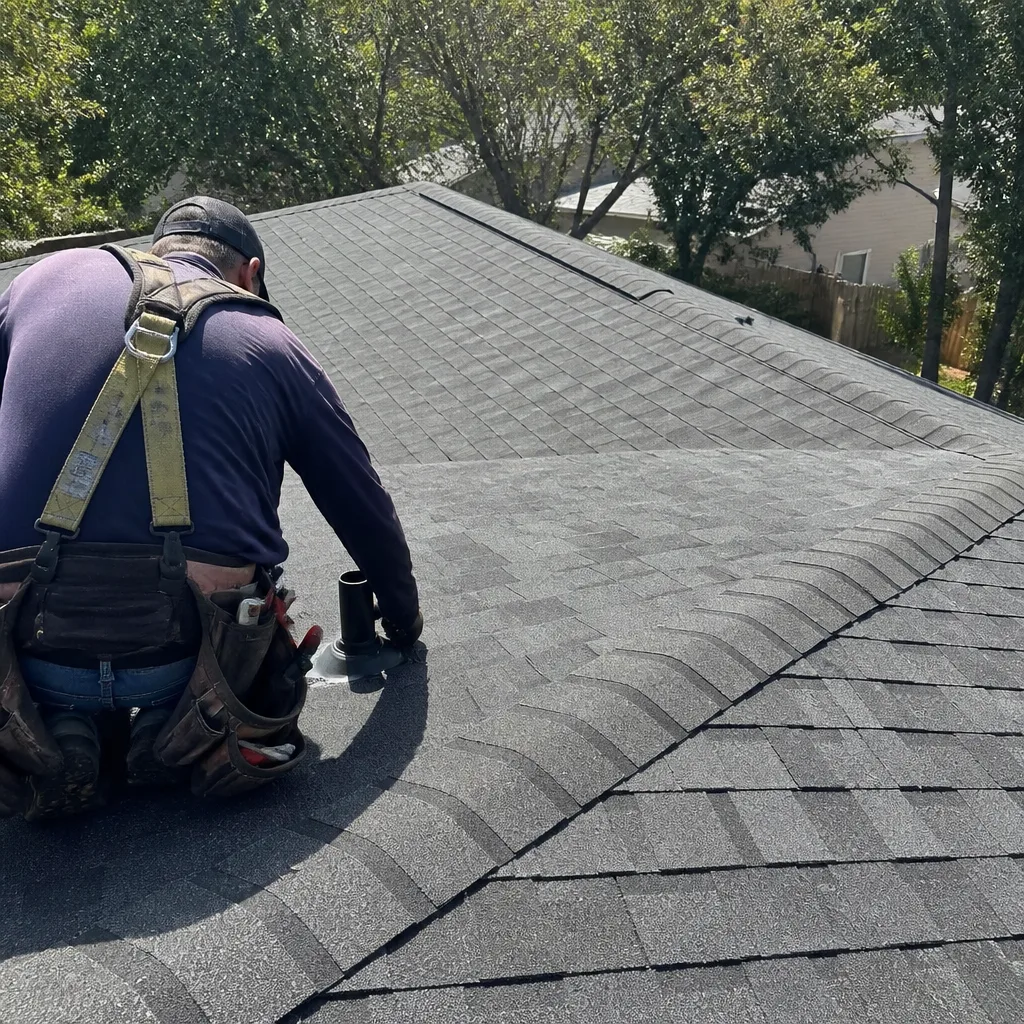
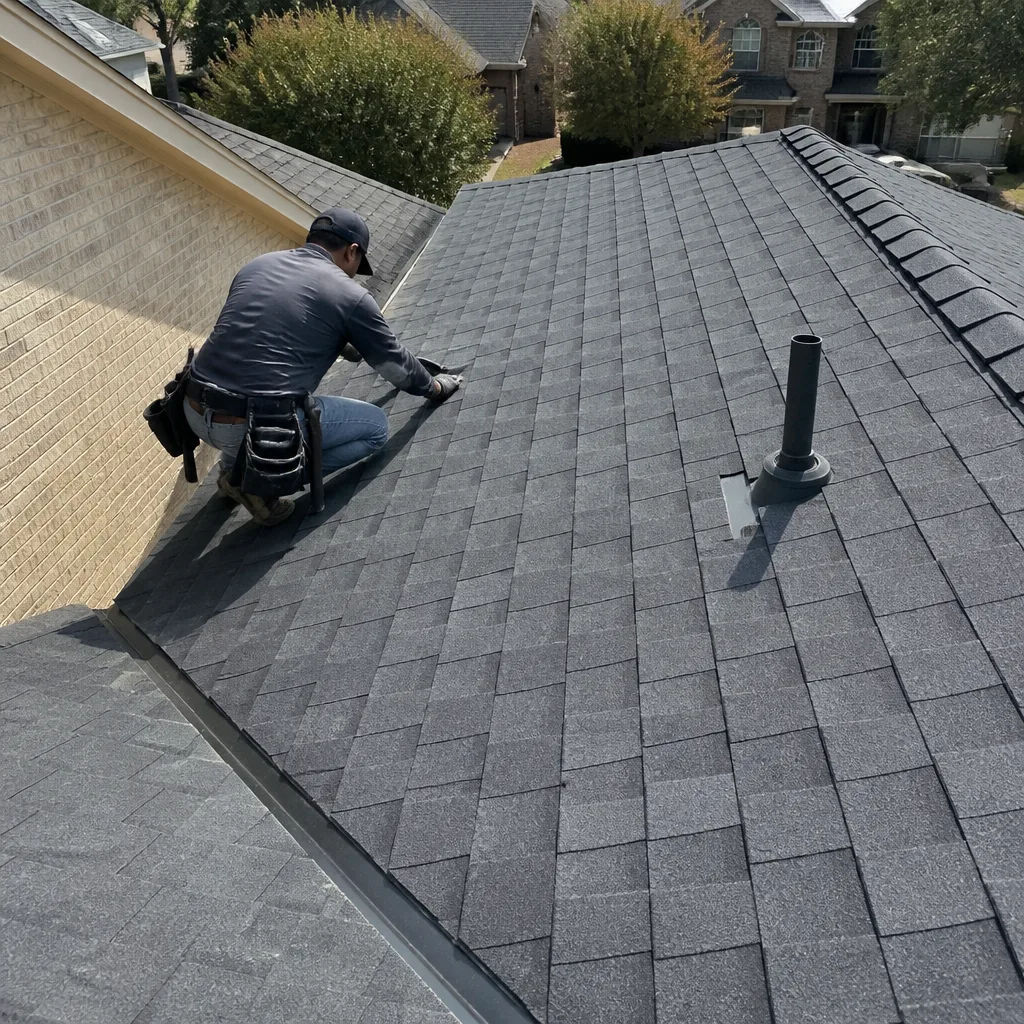
The rubber boot around a vent pipe cracks from UV exposure. On a Fort Worth roof, a boot can fail in 8 to 10 years because of the summer heat. Look for a brittle, split rubber collar. The failure starts small, and the leak follows the pipe down into the home, often presenting as a mysterious water spot on a bathroom ceiling below the attic.
3. Skylights
Skylight flashings are the most common leak source on homes that have them. The welded corner seams of a curb-mounted skylight can separate invisibly, and the leak only appears during wind-driven rain from one direction. Check for lifted flashing at the top corner of the skylight and for cracked sealant around the glass edge.
4. Valleys
Valleys carry more water than any other part of the roof. Fort Worth’s downpour-style storms can dump two inches in an hour, and valley metal that has shifted or corroded will spill water under the shingles. Look for visible nails in the valley metal, rust, or shingles that have washed out of place at the valley center.
5. Wall Step Flashing
Where a roof meets a second-story wall, the step flashing is often installed behind the siding or stucco, so failure is hidden. What you can see is a rust stain running down the siding below the roofline, or a wavy, lifted section of shingles at the wall junction. These are the slow leaks that show up as drywall damage years after the flashing first opened.
We recommend checking these five spots twice a year, especially after any storm with wind over 40 mph. If you see anything that concerns you, call a Roof Repair in Fort Worth specialist before it gets worse. Flashing repairs are among the least expensive roofing fixes when caught early.
Shingle Distress Signals You Can See From the Ground
You don’t need to climb a ladder to spot most shingle problems. A slow walk around the house, looking up with intention, catches the majority of what we find during inspections. The key is knowing which signals matter and which are just cosmetic.
- Curling shingle edges: When the bottom edge of a shingle starts to turn upward, the sealant strip has let go. Curling shingles catch wind, and Fort Worth’s spring storm winds will tear them off eventually. It’s a repair-now signal.
- Missing tabs: A shingle that lost part or all of a tab exposes the nail line below. The next storm sends water into that nail hole. Even one missing tab deserves a look, and a Roof Repair in Fort Worth call is often faster and more reliable than a DIY patch that won’t match.
- Dark streaks: In most cases, the black streaking on Fort Worth roofs is algae, not damage. It is cosmetic and can be cleaned, but it also traps moisture against the shingle surface and shortens granule adhesion over time.
- Visible nails or raised nail heads: A nail that has backed out creates a raised bump under the shingle above it, and the nail head becomes a leak point. This is common on roofs installed with an air nailer set too hard, and it shows up within the first two years.
- Shingle color variation: One or two shingles that look newer than the surrounding roof mean there was a patch at some point. Often the flashing under that patch was never inspected, and the new shingles may be hiding a larger issue.
If you see any of these from the ground, have someone inspect the roof before the next storm. A quick look can prevent a small repair from becoming a roof-wide problem. Our crews always start with a written price, so you’ll know the exact cost before anyone sets up a ladder.
Ventilation Failures That Destroy Shingles From Underneath
Fort Worth summers push attic temperatures high enough to cook shingles from below. When an attic isn’t properly ventilated, the trapped heat accelerates the aging of the shingle’s asphalt layer, causing it to lose flexibility and crack. The shingle then fails years earlier than its rated lifespan, and the warranty often won’t cover heat-related failure because the ventilation problem is an installation or retrofit issue, not a material defect.
Here’s what a ventilation failure looks like from the outside and the inside:
- Ridge and field shingles looking uniformly older than the eaves: Heat rises, and a ventilated attic exhausts at the ridge. If the ridge is hot and the shingles there are cracking while the eave shingles look fine, ventilation is inadequate.
- Rust on attic nails and staining on the underside of the decking: Moisture accumulates in a poorly vented attic during temperature swings. That moisture condenses on the decking and runs down the nails, causing the rust pattern described in the attic inspection section.
- Melted or wavy shingle tabs in the field: Some manufacturer materials, including certain lines from Owens Corning and IKO, are engineered for high-temperature performance, but no shingle performs well in a 160-degree attic. Wavy tabs that don’t lie flat are often heat-distressed.
- High summer energy bills with no other explanation: A hot attic radiates heat into the living space and forces your AC to work harder. If your cooling cost jumps in June, check the attic temperature before you blame the HVAC system.
Fixing ventilation means adding intake at the soffits and exhaust at the ridge, which often requires a professional. When we quote a roof replacement in Fort Worth, ventilation correction is always part of the written price when we find the current setup is insufficient, unlike the risks of handling it yourself covered in our DIY vs Professional Roofing: The Fort Worth Homeowner’s Decision Guide. It’s one of the most common preventable causes of early shingle failure we see, and it’s never a surprise bill when the job is documented properly.
Common Mistakes to Avoid
- Ignoring granule loss because the ceiling still looks fine. Granules in the gutter are often the first and only warning you’ll get for 18 to 36 months. By the time the ceiling shows water, the decking under the shingles is already damaged.
- Assuming a new roof means problem-free for 20 years. Installation errors, ventilation problems, and storm damage can affect a roof in its first year. The 365-Day Done Right Promise exists because problems on new roofs are real, even when the work is done carefully.
- Waiting for the insurance adjuster before getting your own estimate. You deserve a written price from a contractor before the adjuster visit. It gives you a reference point and helps you spot underpayment on the claim.
- Caulking over flashing instead of replacing it. A caulk bead on a failed chimney flashing lasts one season in Fort Worth heat, then cracks and leaks again. The only real fix is removing and replacing the flashing.
- Climbing onto the roof to inspect it yourself after a storm. Steep pitches and weather-loosened shingles create real fall risk. If you need to look, do it from the ground or a ladder anchored at the gutter line. Better yet, have a professional take the look.
- Scheduling repairs without asking who will be on your property. You should know, before the crew arrives, that they’re background-checked and uniformed. It’s not a luxury. It’s a basic expectation.
When to Call a Professional
Call a roofer when you see curling shingles, granule accumulation, fascia pulling away from the roofline, or any of the flashing failures described above. Also call if your attic inspection revealed daylight, staining, soft decking, or rusted nails. These are all signals that something is already underway above the drywall. Birchbark Roofing Fort Worth offers free estimates in Fort Worth. Call (682) 990-0964 to schedule one. You’ll receive a written price before any work starts, and your estimate is never a soft number that changes once the job begins.
Frequently Asked Questions
Most Fort Worth roof repairs run between $350 and $850 for a targeted fix like a pipe boot, a small flashing section, or a few missing shingles. Larger repairs that involve decking replacement or valley work can run $1,200 to $2,800. You’ll get your exact number in writing before any work starts, and that price doesn’t change once the job begins. Call (682) 990-0964 for a free estimate.
Twice a year, and after any storm with wind over 40 mph or hail of any size. Fort Worth’s climate, with its hot summers, clay soil movement, and spring storm season, creates more opportunities for roof problems than most Texas metros. A ten-minute attic check and a walk around the house each spring and fall catches most issues early.
Emergency repairs for active leaks can often be scheduled quickly, but the answer depends on the scope and current weather. A tarp or targeted patch is usually faster than a full repair. Birchbark Roofing Fort Worth answers calls 24/7, and we’ll let you know what’s possible as soon as we understand what’s happening. Call (682) 990-0964 if you have active water coming in.
Most policies cover hail damage, but the claim depends on documentation and the age of the roof. Use the coin test described above to photograph and document what you see before calling your adjuster, and ask a contractor for a written estimate so you have a comparison for the adjuster’s figure. The documentation matters more than the date you file the claim.
Granule accumulation means your shingles are shedding their UV protection, and the pattern of where granules collect tells you why. Corner loss suggests shingle flutter, field loss suggests normal aging, and tab edge loss often points to hail bruising. If you’re seeing enough granules to fill the bottom of a downspout elbow, have the roof checked.
Not necessarily. Fascia separation is often repairable on its own, but it needs to be evaluated for decking edge rot behind the fascia before anyone quotes the job. Catching it at the fascia stage usually means a smaller repair and no ceiling damage inside the home. A written quote will tell you whether the decking is involved.
The Bottom Line
The warning signs that matter most on a Fort Worth roof show up months or years before water reaches your ceiling. Granules in the gutters, curling shingles, fascia separation, flashing corrosion, and attic staining are all visible to a homeowner who knows where to look. Checking these areas twice a year, and getting a written price for anything concerning, is the difference between a small repair and a major one. Birchbark Roofing Fort Worth has been serving Fort Worth since 2000, and every job comes with a written price before work begins, shoe covers and drop cloths on every visit, and a 365-Day Done Right Promise. If the work isn’t right, we make it right. Call (682) 990-0964 to schedule your free estimate.
Written by Erik Lindgren, Owner at Birchbark Roofing Fort Worth, serving Fort Worth since 2000.
See the difference
 Before
 After
After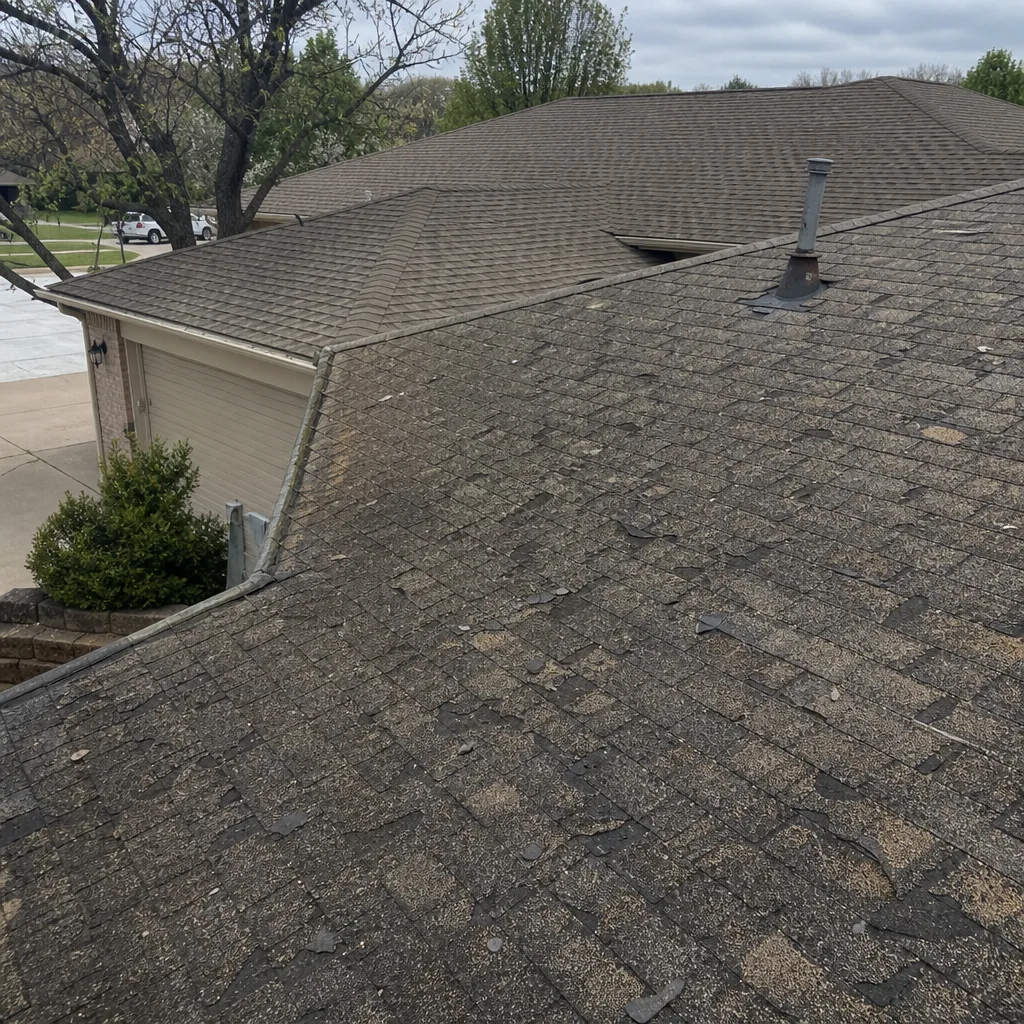 Before
 After
After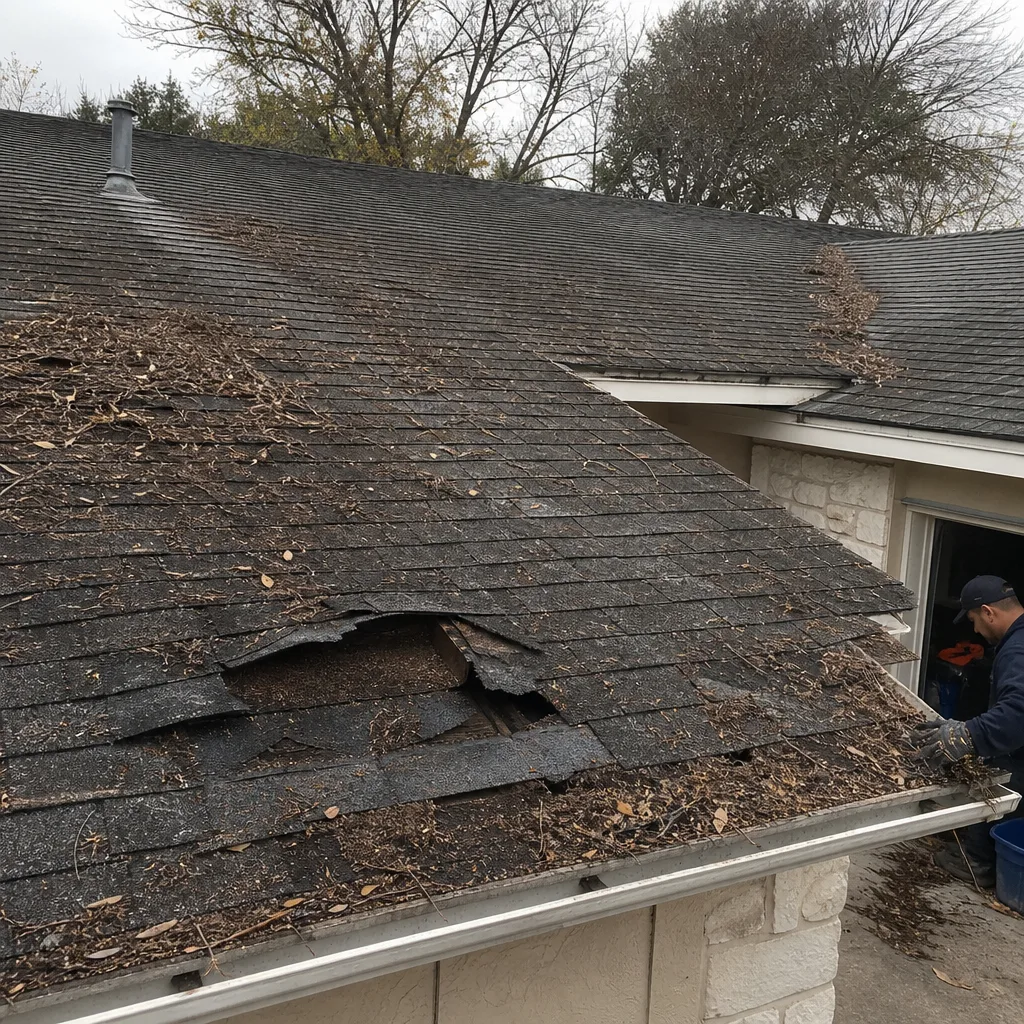 Before
 After
After