
Last updated October 17, 2026
 Metal roofing
 Architectural shingles
 Tile roofing
 GAF
GAF Owens Corning
 Flat & low-slope
Free roof inspection with deck photos before we talk money - GAF and Owens Corning certified installation
Roofing Permits, Codes & Inspections in TX: What You Need to Know
Here’s a counterintuitive fact about roofing in Texas: the state itself issues almost no roofing permits. The authority to require, inspect, and enforce roofing work sits almost entirely with individual cities. That means a contractor who works legally in Dallas may be operating illegally twenty miles west in Fort Worth, because Fort Worth adopted parts of the 2021 International Residential Code (IRC) with local amendments that neighboring cities did not. Homeowners who don’t understand this patchwork often learn it the hard way, at resale or after a claim denial, when the missing permit on record becomes the seller’s problem. This guide explains exactly which Fort Worth roofing jobs need a permit, what the inspection process actually looks like, and how to confirm your contractor pulled the right paperwork before anyone climbs a ladder. For a broader overview, see The Complete Guide to Roofing in Fort Worth.
Quick Answer
Most full roof replacements in Fort Worth require a building permit from the City of Fort Worth Development Services, while minor repairs covering less than 100 square feet of roofing generally qualify as exempt maintenance work under the city’s 2021 IRC adoption. Permit fees for residential re-roofs typically run between $80 and $200 depending on project valuation, and the city schedules inspections on a first-come, first-served basis with most homeowners waiting 24 to 72 hours. Before any work starts, ask your contractor to show you the permit number, the receipt, and the scheduled inspection date, not an emailed promise to “handle it later.”
Styles & brands we work with
Table of Contents
- Which Roofing Jobs Require a City of Fort Worth Permit
- What Fort Worth’s 2021 IRC Adoption Means for Your Roof
- The Fort Worth Inspection Process: Scheduling, What Inspectors Check, and Failed Inspections
- How Fort Worth Differs from Keller, Burleson, and Mansfield
- How a Permit Creates a Dated Record That Protects Your Insurance Claim
- What to Ask Your Contractor Before Work Begins
Which Roofing Jobs Require a City of Fort Worth Permit
Under Fort Worth’s adoption of the 2021 IRC, a building permit is required for any roof replacement where the structural decking is removed, where the roof covering is being substantially replaced, or where the project value exceeds the city’s minor repair threshold. In practical terms, a full tear-off and re-roof, a new roof on new construction, or any job that changes the roofline or structural framing all require a permit. The roof replacement work we do in Fort Worth nearly always falls into this category.
The city does carve out exemptions for true maintenance work. Replacing a few shingles after wind damage, replacing flashing around a single vent, resealing a skylight, or repairing a section of ridge cap typically does not require a permit if the affected area is less than 100 square feet and no structural decking is removed. However, the exemption applies to the repair itself, not to the underlying cause. If a small leak turned into rotted decking, the moment the decking is cut out and replaced, the job tips into permit territory.
Here’s the breakdown most homeowners need:
- Permit required: full or partial tear-off and replacement, decking replacement of any size, changes to roof pitch or profile, new roof on an addition, any work connecting to a new or existing rainwater harvesting system.
- No permit required: shingle repair under 100 square feet, isolated flashing repair, vent boot replacement, gutter work not tied to a structural change, nail-over roof coverings where no decking is exposed and the existing layer is code-compliant.
- Grey zone: layover roofs (new shingles over old shingles). Fort Worth allows one layover in many residential zones, but the decking condition still matters. If the inspector finds rot under an unpermitted layover, the owner faces a full tear-off later.
If you’re unsure whether your job crosses the line, the safest path is to call Development Services and describe the scope. Or ask a roofer who does roof repair in Fort Worth regularly. We tell homeowners what the city will say before we ever write an estimate, because the permit decision affects the price, the timeline, and the resale risk.
What Fort Worth’s 2021 IRC Adoption Means for Your Roof
Fort Worth operates under its own local amendments to the 2021 International Residential Code, which Texas adopted statewide as the baseline in 2022 but left cities free to modify. The practical effect is that Fort Worth’s wind load requirements, underlayment specs, and fastener schedules can be stricter than what a contractor from a smaller neighboring town is used to. A crew that nails a roof in Mansfield one morning may be out of compliance on a Fort Worth roof the same afternoon if they’re using the wrong nailing pattern or a non-approved underlayment.
The 2021 IRC, as amended by Fort Worth, covers several roof-specific requirements that affect your project:
- Wind uplift ratings: Fort Worth sits in a region where the IRC requires roof coverings rated for 110 mph or higher wind speeds depending on the exact zip code. Shingles must be installed per the manufacturer’s high-wind nailing pattern. This is not optional, and an inspector will fail a roof where the nailing pattern deviates from spec.
- Underlayment requirements: Fort Worth code calls for a minimum of one layer of approved synthetic or felt underlayment that meets ASTM standards. On low-slope roofs under 3:12 pitch, a double layer or a self-adhering ice barrier may be required at eaves and valleys, even though Fort Worth’s freeze-thaw cycles are mild compared to north Texas winters.
- Attic ventilation ratios: The IRC require a net free vent area of 1/150 of the attic floor area, or 1/300 with a balanced ridge-and-soffit system. Inspectors will look at existing ventilation and fail the roof if you’re reducing it without compensation.
- Decking thickness and condition: Fort Worth inspectors require decking that meets the original span rating and shows no rot, delamination, or previous water damage. A contractor who nails new shingles over soft decking gets a failed inspection and a tear-off bill.
These requirements are why we recommend working with a roofer who has pulled Fort Worth permits in the last 12 months and understands Seasonal Roofing Care for Fort Worth: Year-Round Homeowner’s Guide. Code amendments change, and a contractor who worked in Fort Worth five years ago may be working from outdated information. A quick call to Development Services confirms what’s current, and we do that on every permitted job.
The Fort Worth Inspection Process: Scheduling, What Inspectors Check, and Failed Inspections
Once a permit is issued, the City of Fort Worth Development Services schedules inspections through its online portal or by phone. Here’s the step-by-step flow of a typical permitted re-roof in Fort Worth:
- Permit is pulled and posted. Your contractor submits the application, pays the fee (typically $80 to $200 for a residential re-roof depending on valuation), and receives a permit card with a unique number. That card must be posted on the property, visible from the street, for the entire project.
- Work begins after posting. The permit is not a retroactive document. Work that starts before the permit is issued is already a code violation, even if the permit is later approved. A good rule: no posted permit card, no tear-off.
- Inspection is requested at the right stage. For a roof, the city usually requires one inspection after the decking is prepped and underlayment is down but before shingles are fully installed. This lets the inspector see the nailing pattern, underlayment, edge metal, and decking condition. Some smaller jobs only need a final inspection after completion.
- Inspector visits within 24 to 72 hours. Wait times vary by season. Spring and early summer, when roofing demand in Fort Worth peaks, can run closer to 72 hours. Winter and late fall are often same-day or next-day. Your contractor must be on site for the inspection.
- Inspector walks the roof. A Fort Worth roof inspector checks: decking condition, underlayment type and overlap, shingle nailing pattern, flashing at penetrations and sidewalls, drip edge installation, and ventilation. They’ll also verify that the work matches the scope on the permit.
- Pass or fail. If everything is compliant, the inspector signs off and the permit is closed. If there’s a deficiency, the inspector issues a correction notice detailing what must be fixed. You then have a set window, usually 30 to 90 days depending on the severity, to make the correction and schedule a re-inspection, which carries a small fee.
Failed inspections are more common than most homeowners realize. The most frequent reasons we see on Fort Worth roofs are: wrong nailing pattern for the shingle brand’s wind rating, underlayment that doesn’t meet the city’s approved list, missing drip edge at the eaves, or decking that was covered before the inspector could see it. A failed inspection is not a disaster, but it does mean the job takes longer and may add a re-inspection fee. A contractor who shrugs off a failed inspection as “the city being picky” is not doing you any favors.
How Fort Worth Differs from Keller, Burleson, and Mansfield
This is where the Texas “cities make their own rules” reality bites. Contractors who work across the metroplex often assume that because they’re permitted in one city, they’re permitted everywhere. That’s a dangerous assumption for homeowners.
Keller, a city of about 45,000 people northeast of Fort Worth, enforces its own building code with amendments that differ from Fort Worth’s on roof pitch minimums and decking replacement thresholds. Burleson, south of Fort Worth, has historically been more permissive on minor repair exemptions but stricter on new construction in certain subdivisions. Mansfield, southeast of Fort Worth, adopted the 2021 IRC with fewer local amendments than Fort Worth, meaning a Mansfield-permitted contractor may not automatically know Fort Worth’s stricter underlayment and high-wind nailing specs.
The practical differences a homeowner might notice:
- Permit fees: Fort Worth’s residential re-roof fees run roughly 20 to 40 percent higher than Mansfield’s for comparable project valuations. A contractor who quotes a lower “permit included” price may be pricing someone else’s fee schedule and planning to file a Fort Worth permit on that lower number, which can trigger a valuation audit.
- Inspection timing: Keller and Burleson often have shorter inspection queues than Fort Worth during peak season, because their inspection volume is smaller. A contractor who says “we’ll have the inspector out tomorrow” may be thinking of their last job in Keller, not a Fort Worth summer queue.
- Underlayment rules: Fort Worth’s local amendments are more prescriptive than Mansfield’s on approved synthetic underlayment brands and minimum overlaps. A Mansfield crew installing underlayment the way they always have may fail a Fort Worth inspection on overlap alone.
- Valley and flashing details: Fort Worth inspectors are known to be strict about open valley metal gauge and sidewall flashing height. Some neighboring cities accept details that Fort Worth will fail, and vice versa varies by individual inspector.
The lesson is not that Fort Worth is “harder” than its neighbors. It’s that each city is its own jurisdiction, and the contractor needs to know the jurisdiction they’re standing in. When we quote a Fort Worth job, we quote Fort Worth codes, Fort Worth fees, and Fort Worth inspection realities, because that’s where the work is happening.
How a Permit Creates a Dated Record That Protects Your Insurance Claim
A permit is more than a bureaucratic step. It’s a dated public record tied to your property that proves specific work was done, when it was done, and that the city inspected and approved it. For insurance purposes, that record is worth more than any contractor’s warranty.
Here’s the scenario that plays out in Fort Worth neighborhoods from Wedgwood to Summerfields: a homeowner files a hail damage claim three years after a roof replacement. The insurer asks for proof of the roof’s age and condition. If the homeowner has the closed permit, the insurer sees a city-approved record dated three years prior with the scope of work, the materials, and the inspection sign-off. The claim proceeds cleanly. If there’s no permit, the insurer sees an unpermitted roof, and claim adjusters are trained to look for any reason to reduce or deny a payout. The homeowner is left arguing with a contractor who may no longer answer the phone.
The same dated record protects you at resale. Title companies in Texas increasingly flag unpermitted work during the property search, especially in Fort Worth where the city’s permit records are digitized and easy to query. A home listed with a roof that was replaced without a permit becomes a negotiation problem. The buyer’s home inspector sees a newer roof, the title search shows no permit, and suddenly the seller is either paying for a permit retroactively (which often requires an inspection and sometimes a partial tear-off to expose the work) or knocking thousands off the sale price. Neither is a good outcome.
There’s one more layer: workmanship issues. If a roof develops a problem three years in and the contractor has gone out of business, the permit record gives you the documentation to pursue either a manufacturer’s warranty claim or your own insurance. The record shows what was installed, by whom, and that it passed inspection at the time. Without it, you’re asking a manufacturer to trust your memory.
What to Ask Your Contractor Before Work Begins
Before the first shingle comes off your roof in Fort Worth, there are five questions that separate contractors who actually pull permits from contractors who say they will. Here’s the checklist we recommend walking through at the estimate table:
- “Will you show me the permit receipt and number before any work starts?” A contractor who has actually pulled the permit can produce a receipt and a permit number in seconds. One who says “we’ll handle permits internally” without showing you a receipt is asking you to trust a process you can’t see. The permit must be posted before work begins, not after.
- “What’s the project valuation on the permit?” This matters. If your $28,000 roof is listed on the permit as $9,000, the contractor is underreporting to reduce the fee. The city can catch this during inspection, and the permit can be held up or the valuation adjusted, which becomes your problem as the property owner.
- “Who schedules and attends the inspection?” A contractor who pulls a permit but never schedules the inspection leaves an open permit on your property. Open permits are red flags at resale. The contractor should schedule the inspection, be present for it, and provide you with the signed-off inspection report.
- “Does your crew work in Fort Worth regularly, or is this a one-off job here?” This gets at the code-familiarity issue. A roofer who does ten roofs a year in Fort Worth knows the current amendments and the inspectors’ focus areas. A roofer doing one Fort Worth roof per year may be running on outdated assumptions about what passes inspection.
- “What happens if the inspection fails?” The answer should include: the correction will be made at no charge to you, the re-inspection will be scheduled immediately, and the re-inspection fee is covered by the contractor. If the contractor hesitates on any of those points, that’s a signal about how they handle accountability.
These questions aren’t about being difficult. They’re about confirming that the contractor treats the permit as a real step in the project, not an optional formality. At Birchbark Roofing Fort Worth, we show the permit receipt, the permit number, and the scheduled inspection date on every permitted job, and we put the written price next to it so there’s no ambiguity about what the permit process costs.
How much does a Fort Worth roofing permit actually cost?
Residential re-roof permit fees in Fort Worth are calculated from the project valuation, with most single-family homes falling between $80 and $200 in permit fees for a standard tear-off and replacement. Larger or higher-valued homes can push toward $250 to $400. The fee is separate from the roofing labor and materials, and it should appear as a line item on your written estimate. If a contractor quotes a suspiciously low permit fee, ask what valuation they’re filing. Underreporting valuation is a known shortcut, and it can delay your inspection. Call Birchbark Roofing Fort Worth home at (682) 990-0964 for a written estimate that includes the exact permit fee for your specific roof and valuation.
How long does the whole permit and inspection process take in Fort Worth?
From permit application to final inspection sign-off, a straightforward residential re-roof in Fort Worth typically runs 7 to 21 days, depending on the season and the roofing contractor’s schedule. The permit itself is often issued within a few business days once the application is complete. The roof work usually takes 1 to 3 days. The inspection wait is the variable part: 24 to 48 hours in slower months, up to 72 hours in peak spring storm season. Plan on the whole sequence taking about two to three weeks from start to closed permit.
See the difference
 Before
 After
After Before
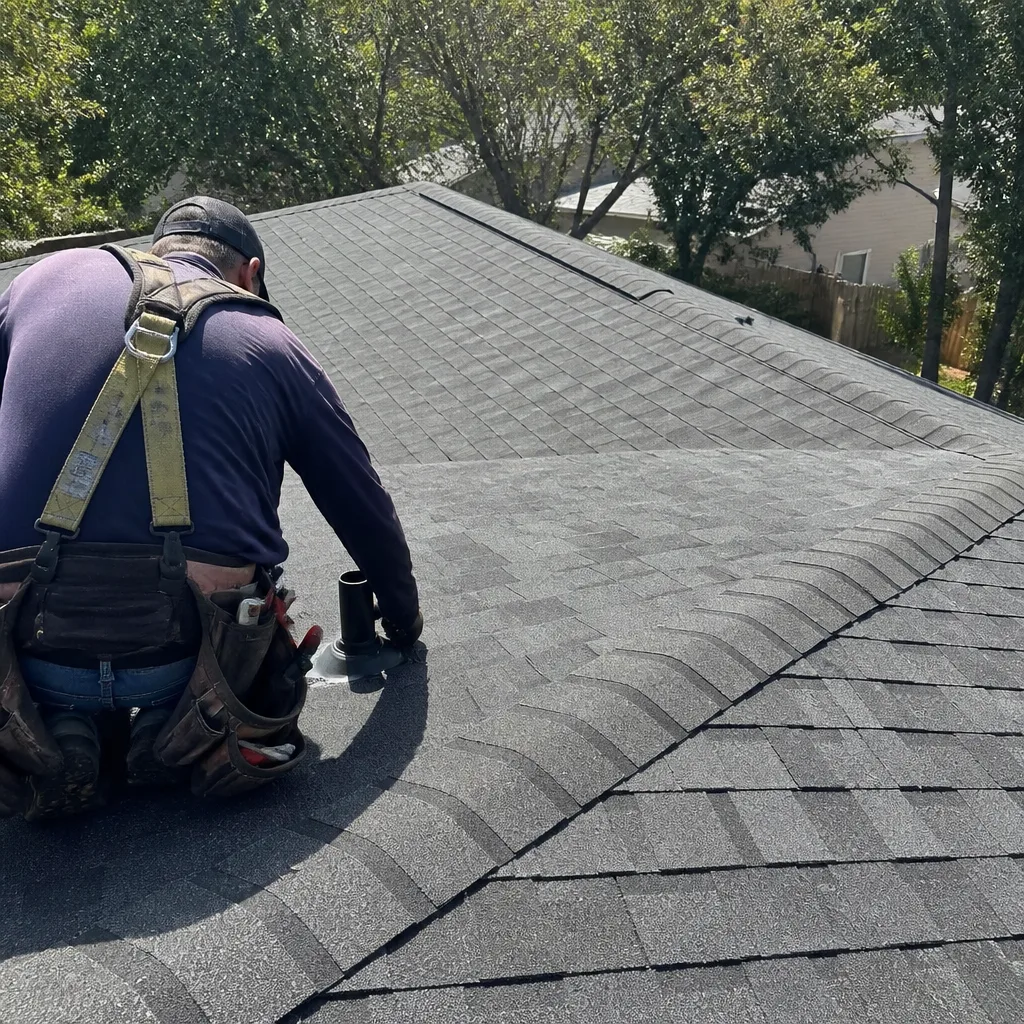 After
After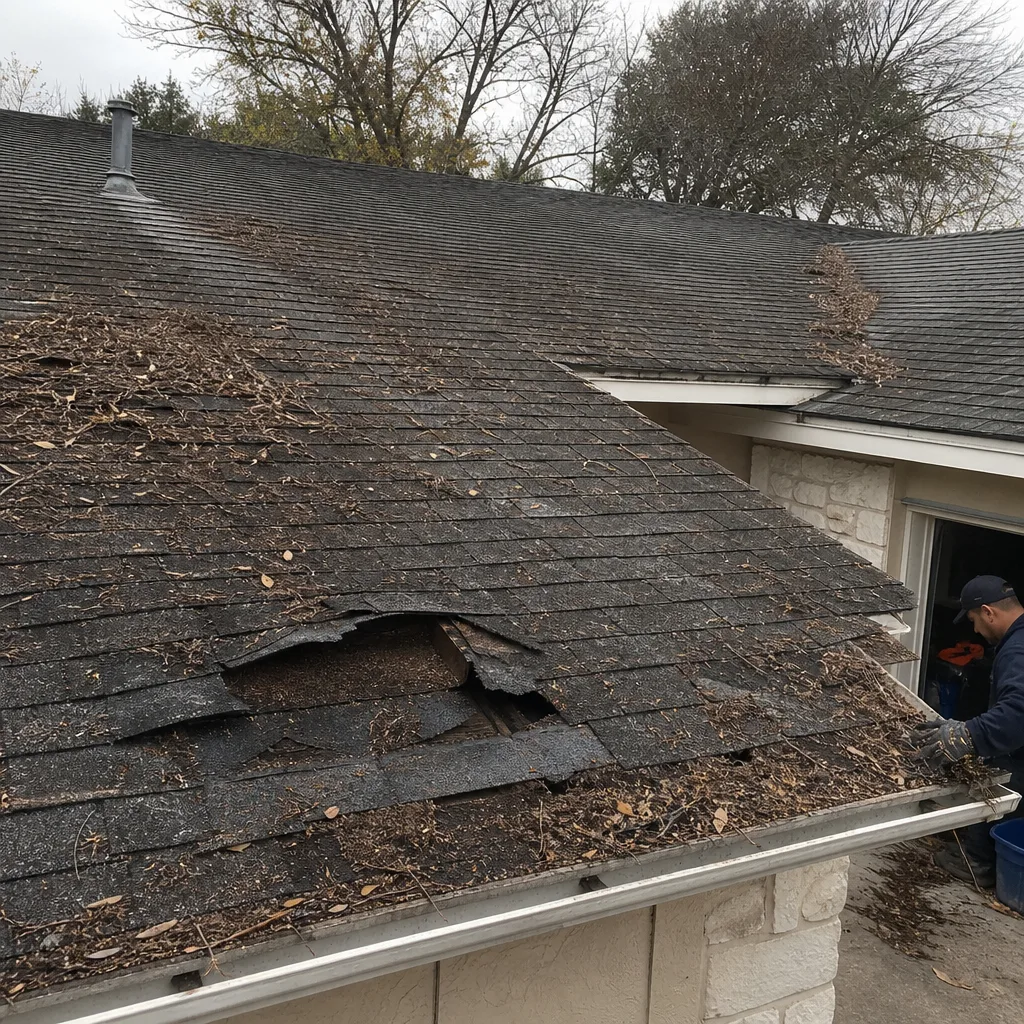 Before
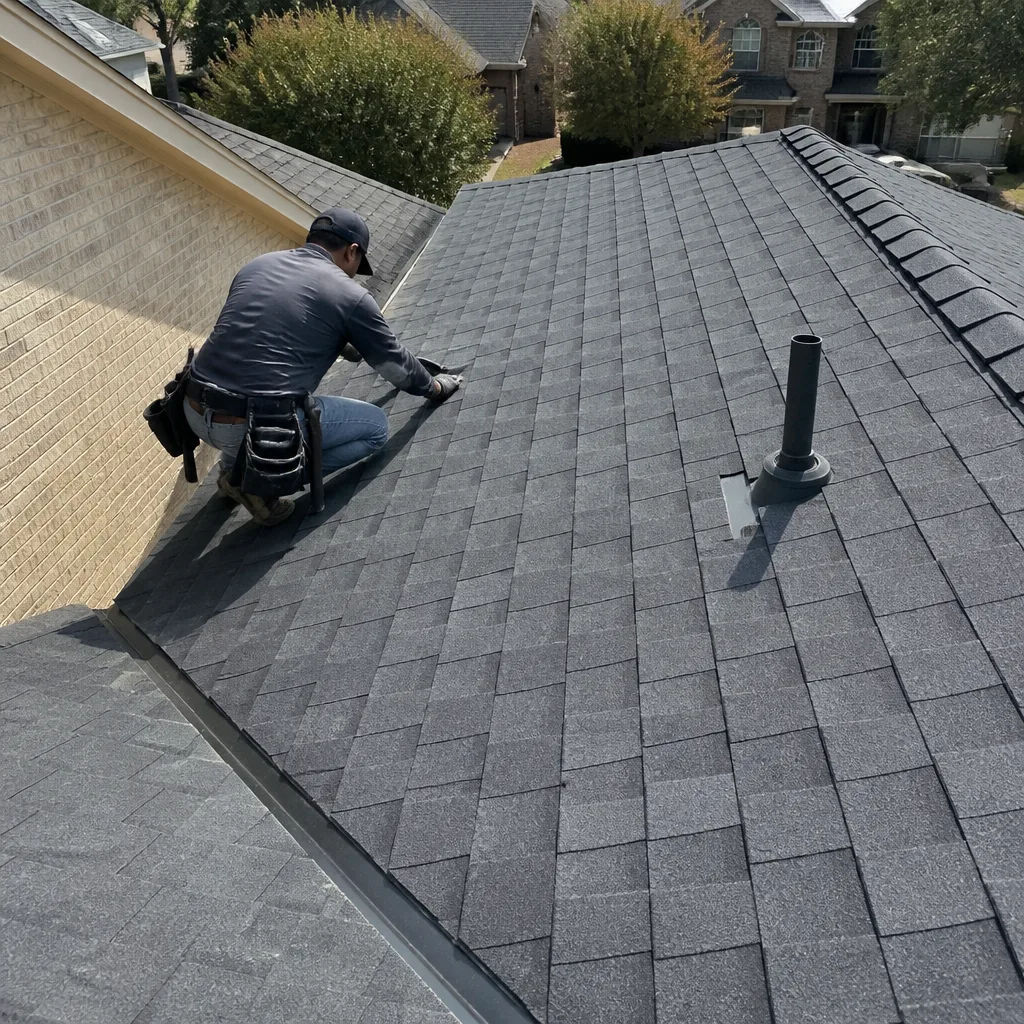 After
AfterCommon Mistakes to Avoid
- Letting the contractor talk you out of a permit for a full replacement. “We can skip the permit and save you $200” is a short-term savings that becomes a resale liability. Fort Worth’s permit records are public and searchable, and title companies check them.
- Starting work before the permit is posted. The permit must be issued and posted before tear-off begins. A contractor who says they’ll “pull it while the crew is working” is gambling with your compliance record.
- Hiring a contractor whose only permit experience is in a neighboring city. Keller, Burleson, and Mansfield all have different local amendments. A roofer comfortable in Mansfield may be out of code in Fort Worth without knowing it.
- Assuming the city will notify you of a failed inspection. Fort Worth sends inspection results to the permit holder, which is typically the contractor. If your contractor goes quiet after an inspection, call Development Services and ask for the status of your specific permit number.
- Paying the final invoice before the inspection is signed off. The permit should be closed before you make the final payment. An open permit on your property is your problem, not the contractor’s, and withholding final payment until the sign-off is the cleanest way to ensure closure.
- Treating the permit as the contractor’s problem, not yours. The permit is filed against the property, not the contractor. If the contractor disappears or goes out of business, the open permit and any code issues remain attached to your address. You have a stake in every step of the process.
When to Call a Professional
If you’re planning a full roof replacement in Fort Worth, the permit and inspection process is not optional, and getting it wrong creates problems that only surface months or years later. You should also call a professional if you’re buying or selling a home with recent roof work and want to verify whether the work was permitted, if you’re filing an insurance claim for roof damage and need the dated record that a permit provides, or if a previous contractor left an open permit on your property that needs to be closed. Birchbark Roofing Fort Worth offers free estimates in Fort Worth, and we walk every permitted job through the full Development Services process, from application to inspection sign-off. Call (682) 990-0964 and we’ll tell you honestly whether your job needs a permit and exactly what it will cost. You can also explore more guides & resources on our blog.
Frequently Asked Questions
In most cases, no. Fort Worth exempts minor roofing repairs covering less than 100 square feet from permit requirements as long as no structural decking is removed or replaced. Replacing a handful of shingles after wind damage, resealing a vent boot, or repairing a small section of flashing are all considered maintenance work. The moment the repair exposes rot or requires decking replacement, it tips into permit territory. If you’re unsure, call Development Services or ask a Fort Worth roofer before work begins.
The unpermitted roof becomes a title and disclosure problem. Buyers’ title companies can and do flag unpermitted work in Fort Worth, and the result is usually one of three outcomes: you reduce the sale price, you pay to have the work permitted retroactively (which often requires an inspection and sometimes partial removal of the roof to expose the work), or the buyer walks. Call (682) 990-0964 if you need to bring an unpermitted roof into compliance; we’ve helped Fort Worth homeowners navigate the retroactive permitting process.
For a standard residential re-roof, the permit fee in Fort Worth typically falls between $80 and $200, calculated from the project valuation. Larger homes or higher-valued roofs can push the fee to $250 or more. The permit fee should be a line item on your written estimate. If a contractor quotes no permit fee or an unusually low one, ask what valuation they filed, because underreporting can delay the inspection or trigger a valuation audit by the city.
Most homeowner’s insurance policies in Texas do not include permit fees as a standard covered item, though some extended replacement cost endorsements will reimburse the permit fee as part of a covered roof replacement claim. The cleaner answer is that the permit fee is usually a few hundred dollars or less, and the dated record it creates is worth far more than the fee if you ever need to file a claim or sell the house. When we work with insurance claims, we include the permit fee in the written estimate and document the permit for the claim file.
Fort Worth requires contractors pulling building permits to be registered with the City of Fort Worth and to hold the appropriate state and local credentials. A contractor who is not registered cannot legally pull a permit in your name. Homeowners can pull permits as property owners, but that shifts the compliance responsibility to you personally. Before work starts, ask to see the contractor’s Fort Worth registration and the permit receipt with the contractor’s name listed as the permit holder. This is the simplest way to confirm the permit is real and properly filed.
Once the inspection is requested, the wait is typically 24 to 72 hours depending on the season and inspection volume. The on-site inspection itself usually takes 20 to 40 minutes for a standard residential roof. The inspector will walk the roof and check decking condition, underlayment, nailing pattern, flashing, drip edge, and ventilation. Your contractor must be present for the inspection. If the inspector finds a problem, the correction notice will detail the fix and the re-inspection window, which is usually 30 to 90 days.
The Bottom Line
Roofing permits in Texas are a local matter, and Fort Worth’s requirements are specific enough that contractors from neighboring cities routinely get them wrong. A full replacement almost always needs a permit, minor repairs usually don’t, and the gray area between the two is where homeowners get into trouble. The permit creates a dated public record that protects your insurance claim and your resale value, and it costs less than most homeowners expect, typically $80 to $200 for a standard re-roof. The inspector checks what’s under the shingles, not just what’s on top, which is why the inspection happens before the roof is finished. Before any work starts, ask to see the permit receipt and number, the project valuation, and the scheduled inspection date. If a contractor can’t show you those three things, you’re dealing with someone who plans to skip the process or handle it sloppily. A roofing permit in Fort Worth is not a hurdle; it’s the documentary proof that your roof was installed to code, inspected by the city, and recorded for your future protection.
Written by Erik Lindgren, Owner at Birchbark Roofing Fort Worth, serving Fort Worth since 2000.