
Last updated October 17, 2026
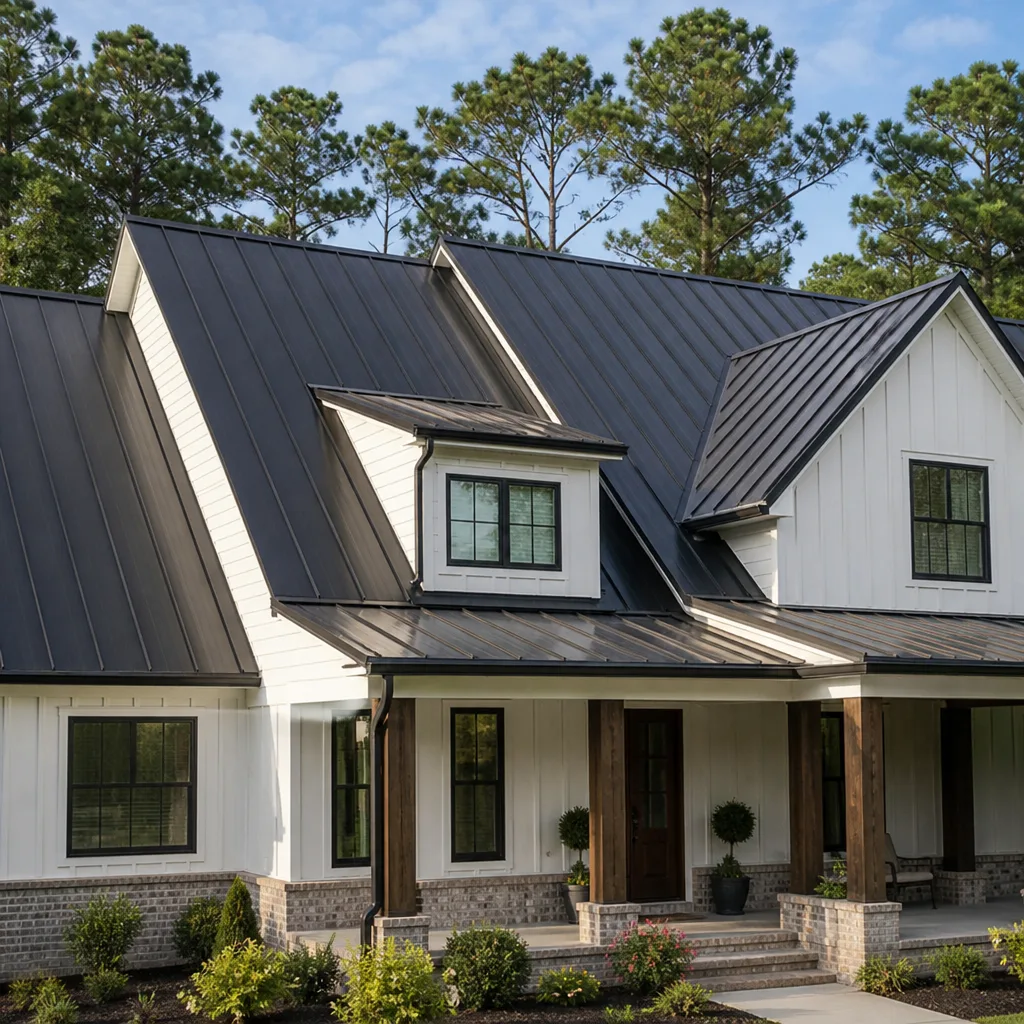 Metal roofing
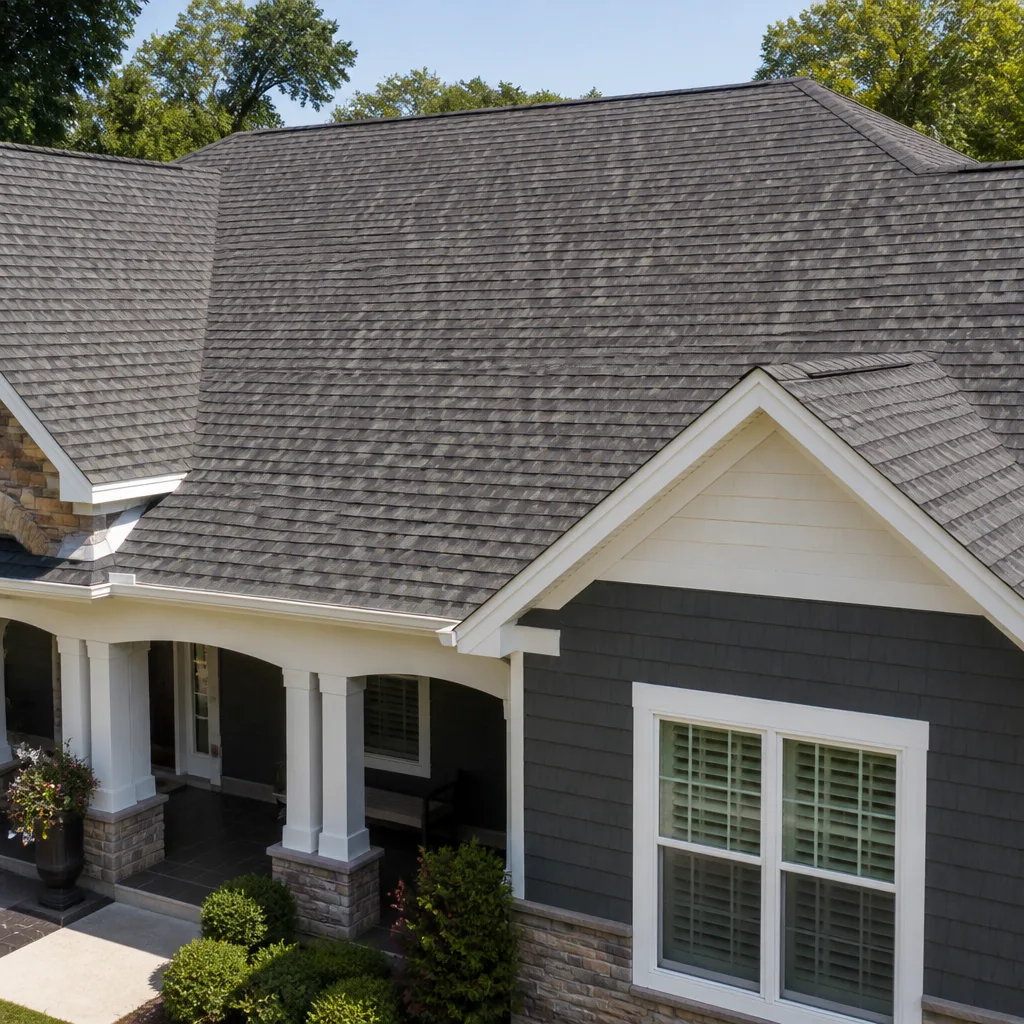 Architectural shingles
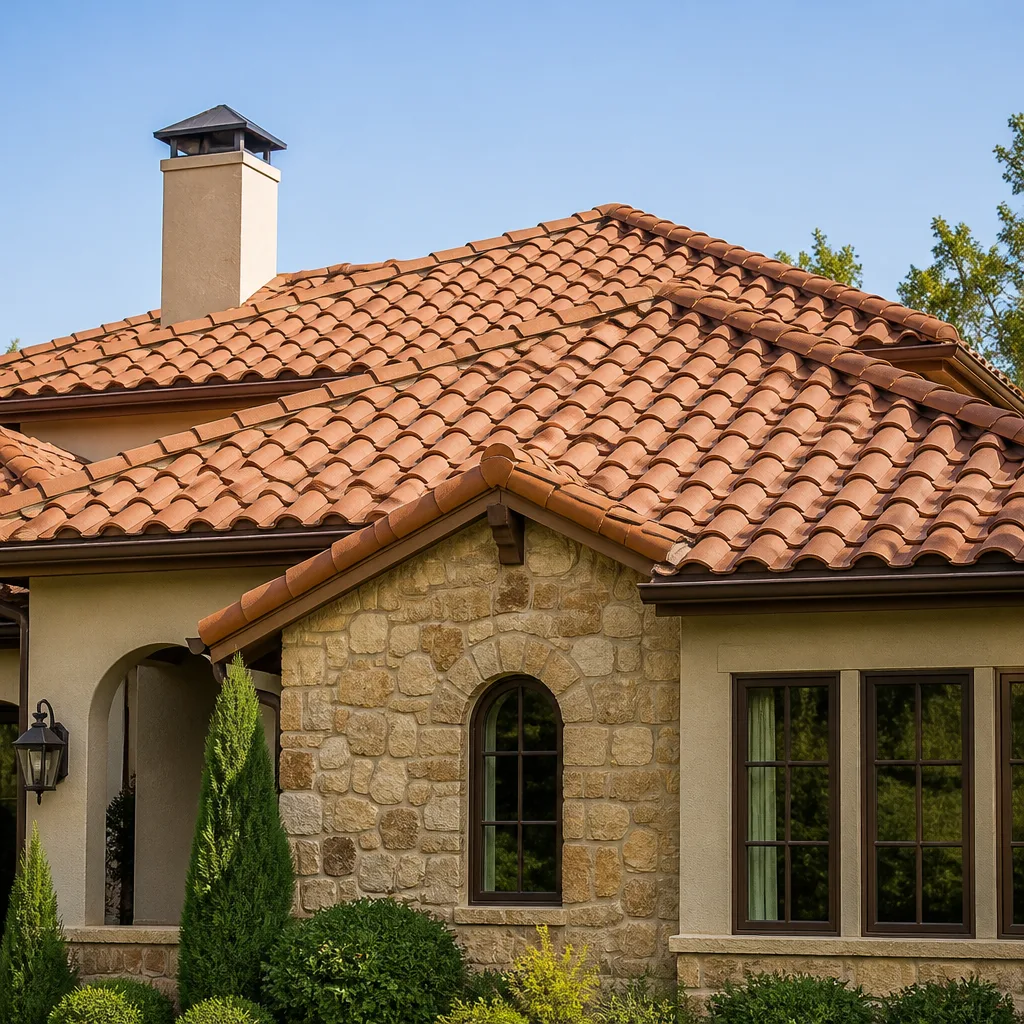 Tile roofing
 GAF
GAF Owens Corning
 Flat & low-slope
Free roof inspection with deck photos before we talk money - GAF and Owens Corning certified installation
Roofing Cost Breakdown: The Fort Worth Homeowner’s Reference for 2026
The average gap between the lowest and highest bid on a Fort Worth re-roof sits around $4,200. That number scares a lot of homeowners, and it should. But here’s what almost nobody tells you: when you ask both contractors to itemize their bids line by line, that gap rarely means one company is gouging you and the other is being honest. It means they’re pricing different jobs. One bid includes decking replacement, ice-and-water shield, and full haul-off. The other assumes those will be “extras” discovered mid-project. This guide explains exactly what goes into a Fort Worth roofing bid, what each line item should cost in the current North Texas market, and how a written price protects you from the gap. For Roofing Warning Signs: A Fort Worth Homeowner’s Reference Guide, see our companion post. By the end, you’ll know how to compare bids on equal terms instead of defaulting to the lowest number.
Quick Answer
A full roof replacement in Fort Worth typically runs between $9,800 and $18,600 for a standard single-family home in 2026, with most homeowners landing near $13,400. The range reflects real differences in material grade, decking condition, and scope inclusion. Roof repairs run $450 to $2,800 depending on whether you’re patching a small leak or replacing a full slope. Your exact number should be written in dollars before any work starts, never estimated verbally.
Styles & brands we work with
Table of Contents
- The Line-Item Breakdown: What a Fort Worth Re-Roof Actually Costs
- Why Fort Worth Bids Differ by Thousands: Scope, Not Honesty
- Fort Worth Hail and the Class 4 Shingle Math
- Hidden Costs on Fort Worth Homes Built 1978 – 1995
- How a Written Price Protects You From Post-Job Charges
- What the 365-Day Done Right Promise Means in Dollar Terms
- How to Compare Fort Worth Roofing Bids Step by Step
The Line-Item Breakdown: What a Fort Worth Re-Roof Actually Costs
Every roofing bid in Fort Worth should break down into six core categories. If a contractor hands you a single number with no breakdown, that’s your first red flag. Here’s what each item costs per square (a “square” is 100 square feet of roof area) in the current North Texas market, and what a typical 22-square single-story home in neighborhoods like Wedgwood, Ridglea Hills, or Heritage would total.
- Materials (shingles, underlayment, fasteners, pipe boots, ridge cap): $180 – $260 per square. A standard architectural asphalt shingle from GAF or CertainTeed lands mid-range. Premium designer shingles or a standing seam profile push higher.
- Labor (tear-off, installation, and the crew’s time): $140 – $200 per square. Steep pitches, multiple stories, and complex roof geometry all increase labor cost. Fort Worth’s clay soil doesn’t affect roof labor directly, but our July heat does: crews schedule around it, and that’s built into every honest bid.
- Decking allowance: $1.75 – $2.50 per square foot of replaced plywood. Most reputable Fort Worth roofers include a base allowance of 2 – 3 sheets in the bid, then treat additional decking at a stated per-sheet price. Builders in the 1980s used thinner OSB, and two hail seasons plus high attic humidity means it’s often compromised. We’ll get to that in the hidden costs section.
- Underlayment upgrades (ice-and-water shield, synthetic felt): $50 – $80 per square. This is the line item most often missing from a cheap bid. A synthetic underlayment over the entire deck plus ice-and-water shield at eaves and valleys is standard for any Fort Worth home with a pitch under 4:12.
- Permit fee: $75 – $150, set by the City of Fort Worth. Anyone quoting you a re-roof without a permit line item is either rolling it in without saying so or planning to skip it. Skipping it voids your title insurance coverage if a future buyer flags the unpermitted work.
- Haul-off and disposal: $300 – $600 for the full tear-off. That’s the dumpster, the landfill fee, and the crew’s time loading. Some contractors bury this in “labor.” It should be its own line.
On a typical 22-square Fort Worth home, that puts a full architectural shingle replacement at roughly $12,700 to $14,900 before any decking overage. If a bid comes in at $8,500, something is missing. The question is what.
Why Fort Worth Bids Differ by Thousands: Scope, Not Honesty
Here’s the counterintuitive part. We regularly see two Fort Worth bids for the same house separated by $4,000 or more. Homeowners assume one contractor is inflating his price or the other is running a fly-by-night operation. In the majority of cases, neither is true. They’re quoting different scopes of work, and the cheaper bidder often doesn’t realize it yet because no one’s taken the old roof off.
The differences usually come down to four things:
- Decking replacement. One bid includes a realistic allowance for rotted or hail-damaged decking. The other assumes the deck is perfect, then charges $75 per sheet as a “change order” once tear-off reveals the truth.
- Ice-and-water shield coverage. Code in Fort Worth requires it in certain locations. One bid covers eaves, valleys, and roof penetrations. The other does the bare code minimum and treats more coverage as an upgrade.
- Haul-off and disposal. One bid includes the dumpster in the price. The other leaves it off and adds $500 when the crew arrives with nowhere to put the old shingles.
- Ventilation correction. Fort Worth attics cook in August. A bid that includes adding or replacing ridge vents and soffit vents costs more up front but preserves the shingle warranty. A bid that ignores ventilation is cheaper and sets you up for a denied warranty claim in year six.
When you line up bids side by side and they’re not itemized, you’re not comparing prices. You’re comparing confidence levels. The contractor who writes down what’s included is pricing the roof he can see. The contractor who gives you one number is pricing the roof he hopes is there. Both know how this ends: the change order. And the Fort Worth homeowner pays it because the roof is already open.
Fort Worth Hail and the Class 4 Shingle Math
Fort Worth sits in one of the most hail-prone corridors in the country. The National Weather Service has documented multiple significant hail events in Tarrant County in the past decade, with stones large enough to strip granules off a standard asphalt shingle in minutes. A Class 4 impact-rated shingle costs $25 to $45 more per square than a standard Class 3 product. On a 22-square roof, that’s $550 to $990 extra. The question is what you get for it.
Start with the shingle itself. Class 4 shingles from CertainTeed or Tamko are tested to withstand a 2-inch steel ball dropped from 20 feet without cracking. That’s more protection than most hailstones actually deliver. But the bigger number is in your insurance premium. Many Texas carriers offer a premium discount for a Class 4 roof, typically 5% to 35% off the wind and hail portion of your policy. On a $2,400 annual premium, a 20% discount is $480 a year. The upgrade pays for itself in two severe seasons, and it keeps paying.
Ask your carrier these three questions before you decide:
- What percentage discount do you offer for a Class 4 impact-resistant roof?
- Does the discount apply to the entire premium or only the wind and hail line?
- Will you issue that discount in writing before the roof goes on?
Every carrier handles this differently. Some require the roofer to submit a certificate after installation. Others want a copy of the invoice showing the shingle model. Birchbark Roofing Fort Worth has installed Class 4 products across Fort Worth, and we’ll provide whatever documentation your carrier needs. The upgrade is not right for every home. If your roof is in a heavily treed pocket of Ryan Place where hail rarely reaches full force, you may be better off putting that $900 toward a better underlayment. But in exposed subdivisions on the south and west edges of Fort Worth where storms roll in off the open prairie, Class 4 is the quiet best financial decision most homeowners never hear about.
Hidden Costs on Fort Worth Homes Built 1978 – 1995
Fort Worth’s mid-ring neighborhoods came of age in a specific window: roughly 1978 to 1995. Halton City saw some of it, but the real concentration is in areas like East Fort Worth, portions of Northside, and the neighborhoods that filled in around loop 820. Homes from this era share three roof-deck characteristics that add real money to a re-roof, and none of them show up on an exterior inspection.
Rotted decking at the eaves. Builders in this period used 3/8-inch plywood in some cases, thinner than the half-inch minimum common today. Forty years of Fort Worth humidity cycles, occasional ice dams, and the odd unnoticed leak leaves that plywood soft at the edges. When a crew sets a nail, the nail doesn’t grip. The fix is replacing one to two sheets per slope, at $65 to $85 per sheet including labor and disposal.
Undersized ventilation. The ratio of attic vent area to floor area on houses from this window often clocks in at half of today’s requirement. Fort Worth summer attic temperatures above 140 degrees cook shingles from below. The fix is adding ridge vent or, if the roof geometry won’t allow it, box vents and additional soffit intake. Budget $400 to $900 for the correction. It’s not cosmetic. Every major shingle manufacturer’s warranty excludes heat-related premature failure when ventilation is inadequate, and they’ll inspect before approving a claim.
Outdated drip edge profile. Many homes built before the mid-90s have a short-profile aluminum drip edge or none at all. Current Fort Worth building code requires a minimum 2-inch roof flange. When the roofer re-flashes the perimeter, they have to bring the drip edge to code, which adds $2 to $3 per linear foot around the entire roof edge. On a 22-square home, that’s $350 to $500. A contractor who never mentions drip edge is either planning to reuse the old material (a code violation) or skip the line item and bill it later.
These are not “gotcha” costs. A good Fort Worth roofer knows they’re coming on this vintage of home and builds an allowance into the written price. That’s the whole point of the line-item bid. The unknown becomes a known quantity with a dollar figure attached, and the homeowner decides before the roof comes off whether they’re prepared for it.
How a Written Price Protects You From Post-Job Charges
There’s a phrase that shows up in some Fort Worth roofing contracts: “additional charges may be necessary upon discovery of unforeseen conditions.” That sentence, left unqualified, is a blank check. It means the $12,000 bid can become a $17,000 job after the roof is open, and the homeowner’s leverage is already gone.
A written price with a defined allowance structure closes this gap before it opens. Here’s what to look for in the contract language:
- Decking is priced per sheet. The contract states, “Decking replacement billed at $72 per 4×8 sheet, with a base allowance of three sheets included.” You know the exact cost of every additional sheet before the first nail is pulled.
- Haul-off is its own line item. If the dumpster fee is broken out and stated in dollars, it can’t be “recalculated” at the end.
- The written price is the ceiling, not the floor. Language should say, “Any cost not itemized herein is included in the total price.” That’s the sentence that matters most. It makes the contractor responsible for seeing the job before he bids it, not for discovering it after you’re committed.
- Permit fees are stated, not estimated. The City of Fort Worth permit fee is a fixed number. It should appear as a fixed number.
At Birchbark Roofing, the written price is always provided before any work begins. Not a range, not a verbal estimate, not a “market allowance.” A dollar figure. It’s part of how we run every job in Fort Worth, and no-hassle upfront pricing means exactly what it says. If we missed something on the inspection, that’s our miss, not your change order.
What the 365-Day Done Right Promise Means in Dollar Terms
Most roofing warranties in Fort Worth separate two things: the manufacturer’s material warranty, which might run 30 years to lifetime, and the contractor’s labor warranty, which often runs one to five years. Here’s what almost no homeowner does when comparing bids: assigns a dollar value to the labor warranty.
Suppose two companies bid the same roof at $13,200. Company A offers a one-year labor warranty. Company B offers the 365-Day Done Right Promise: if the work isn’t right, it gets made right, no charge, for a full year after completion. If a leak develops from an installation error at month eight, Company A might still fix it if they’re honorable, but the contract doesn’t require it. Company B’s contract does. In dollar terms, the value of that guarantee is the cost of a potential call-back: typically $400 to $1,200 for a leak repair on a roof that was just installed. When you’re comparing bids, a contractor with a written one-year workmanship guarantee is effectively discounting Company B by that amount.
The 365-Day Done Right Promise covers every roof repair and replacement Birchbark performs in Fort Worth. It’s not a brochure line. It’s the sentence that changes what “done” means. A roof that leaks in month eight wasn’t done right at month zero, and the homeowner shouldn’t pay to fix our mistake. Under the promise, they don’t.
This also changes the comparison with the “cheaper” contractor. A $12,500 bid with no meaningful labor warranty versus a $13,200 bid with a written one-year make-it-right guarantee: the $700 gap is smaller than the expected value of one post-install issue. You’re betting $700 that the cheaper roofer’s crew made zero errors, visible or not. The promise transfers that risk to the roofer, where it belongs.
How to Compare Fort Worth Roofing Bids Step by Step
When you’ve gathered three or four bids from Fort Worth roofers, do the following in order. This is the process we’d recommend to any friend from our Birchbark Roofing Fort Worth home base to the far side of Tarrant County.
- Eliminate any bid that isn’t itemized. A single number with no breakdown is not a bid. It’s a mood.
- Check that all six core line items appear: materials, labor, decking allowance, underlayment, permit, haul-off. Missing items are future change orders.
- Compare shingle brand and model, not just “architectural.” A GAF Timberline and a CertainTeed Landmark are both architectural shingles, but they sit at different price points and carry different warranty terms. One bid at $12,000 with a premium model is a better value than a bid at $11,500 with a builder-grade product from the same brand.
- Confirm the decking overage price per sheet. This is the most common post-start charge in Fort Worth. It should be in writing.
- Read the warranty paragraph carefully. Specifically the contractor’s labor warranty. Manufacturer’s warranty is on the shingle itself; the labor warranty is what protects you when installation goes wrong.
- Ask for the written price in dollars before you sign anything. Not a range. Not a “depends on” number. A dollar figure. If a company won’t put it in writing, walk.
Fort Worth homeowners already know that a roof is one of the biggest checks they’ll write on a house that isn’t the purchase price. What fewer know is that the bid itself is a contract of confidence. The more specific the line items, the more likely the roofer has actually looked at the job, understood the house’s era, the local code, and the hail exposure, and is prepared to stand behind the number. Want a deeper look at what a full replacement involves? See our guide to Roof Replacement in Fort Worth. If you’re dealing with a leak and need a patch first, start with Roof Repair in Fort Worth. And if you want to know how we run jobs day to day, visit our Roofing Company in Fort Worth page.
Common Mistakes to Avoid
- Taking the lowest bid without reading the scope. The $8,500 bid that skips decking, haul-off, and ice-and-water shield becomes a $13,000 job by the end of week one, and no permit was ever pulled. You haven’t saved money. You’ve lost control.
- Signing a contract with no written price. Verbal estimates in Fort Worth evaporate. If the number isn’t on paper with a signature line, it doesn’t exist.
- Skipping the decking question entirely. Homes built between 1978 and 1995 in Fort Worth have a high probability of rotted or thin decking at the eaves. If your contractor hasn’t mentioned decking, he hasn’t looked at the roof.
- Choosing shingles without running the Class 4 insurance math. Fort Worth’s hail exposure makes Class 4 a financial calculation, not just a material upgrade. Get the premium discount number from your carrier first.
- Not verifying the labor warranty in writing. A roofer who says “we’ll take care of you” is offering goodwill, not a guarantee. Goodwill doesn’t survive month ten.
- Comparing bids that list different shingle brands as if they’re identical. GAF, CertainTeed, and Tamko all make quality products, but their warranties and price tiers differ. Compare model to model, not brand to brand.
See the difference
 Before
 After
After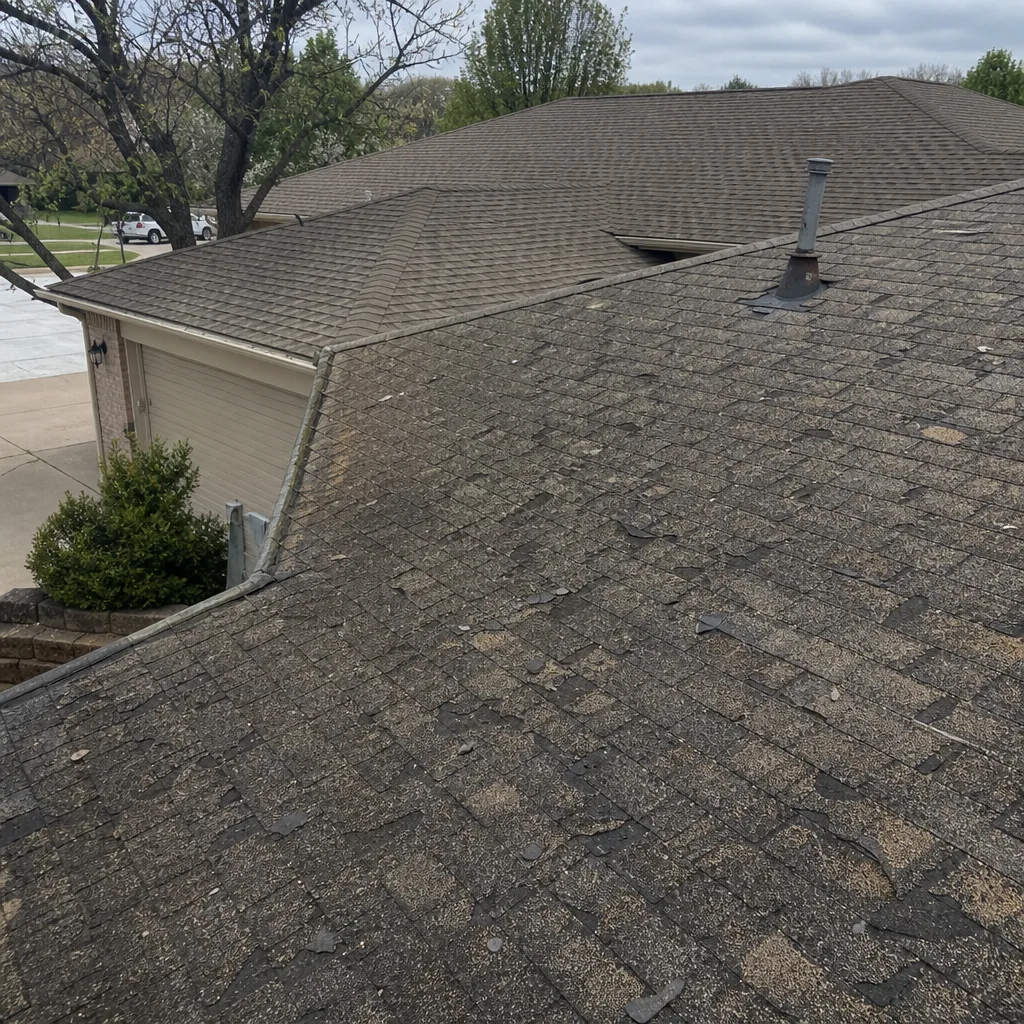 Before
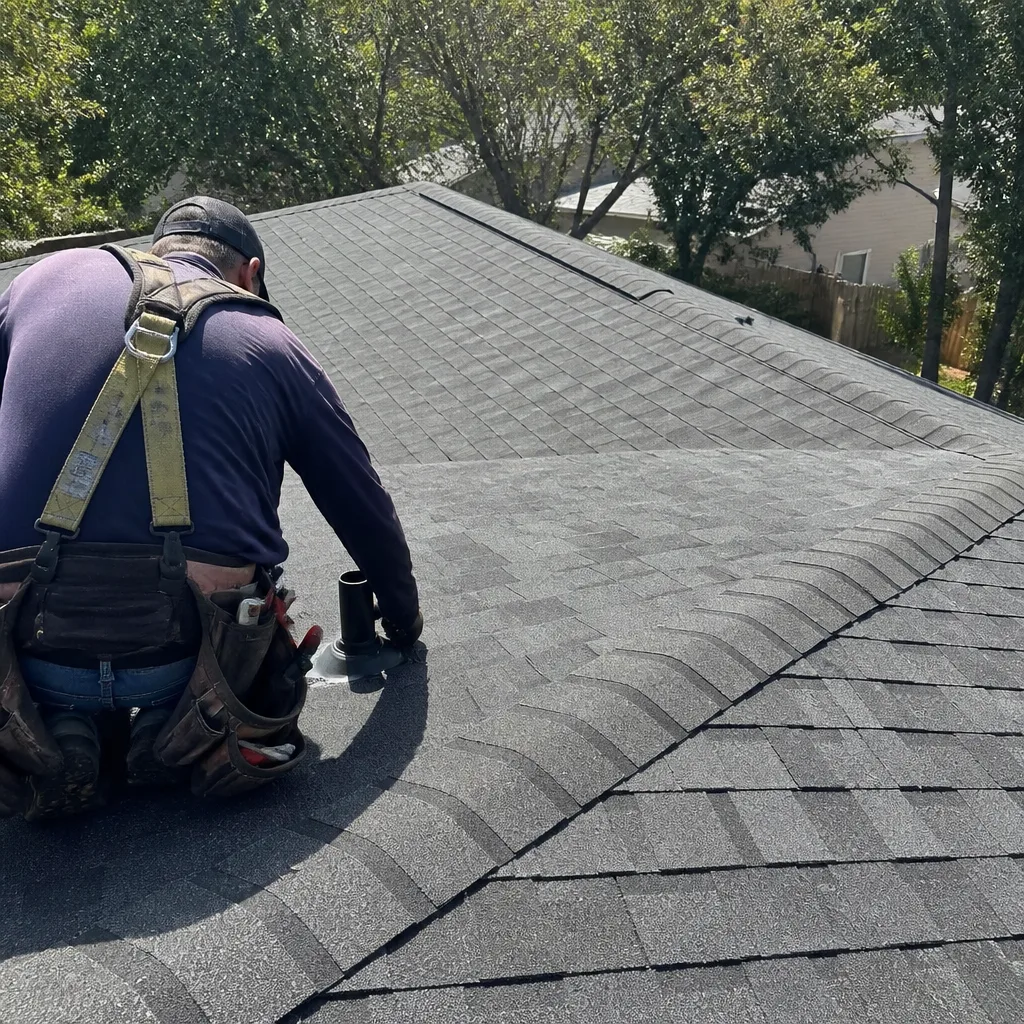 After
After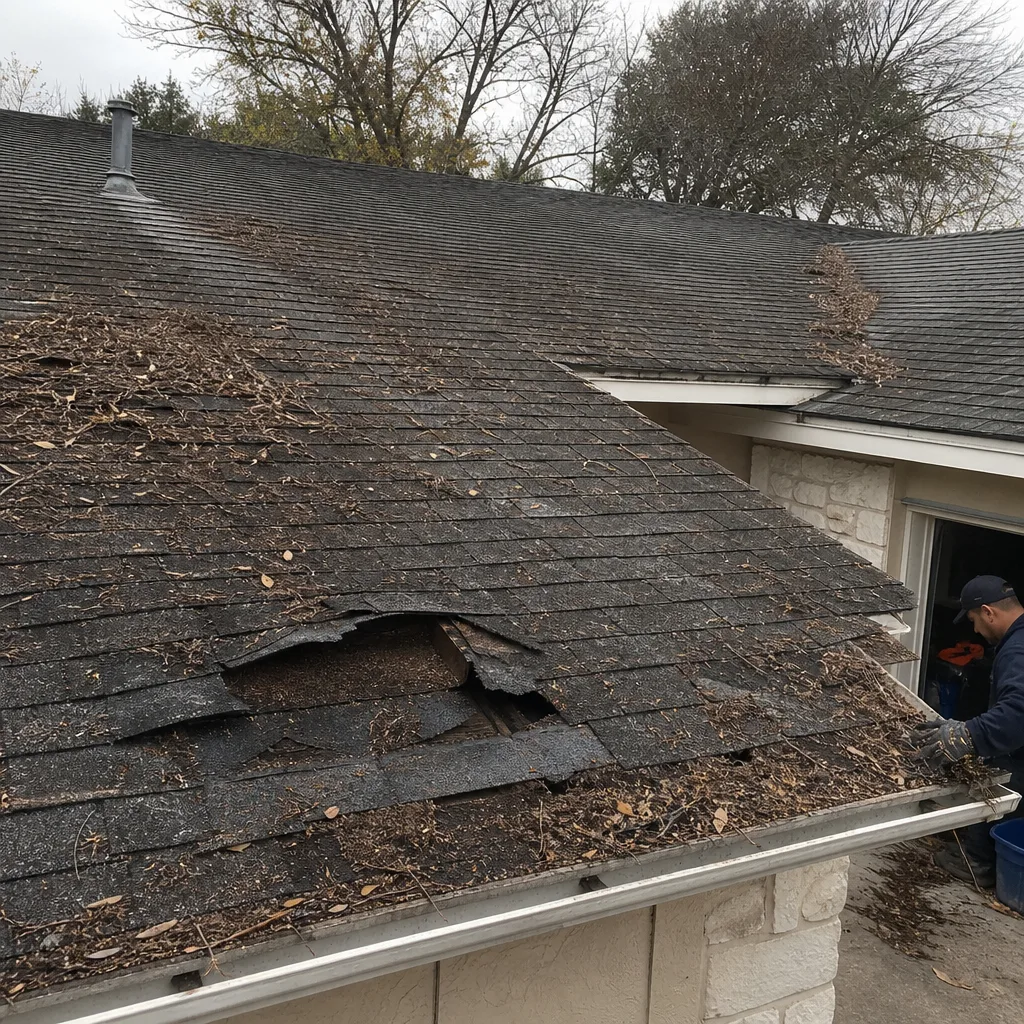 Before
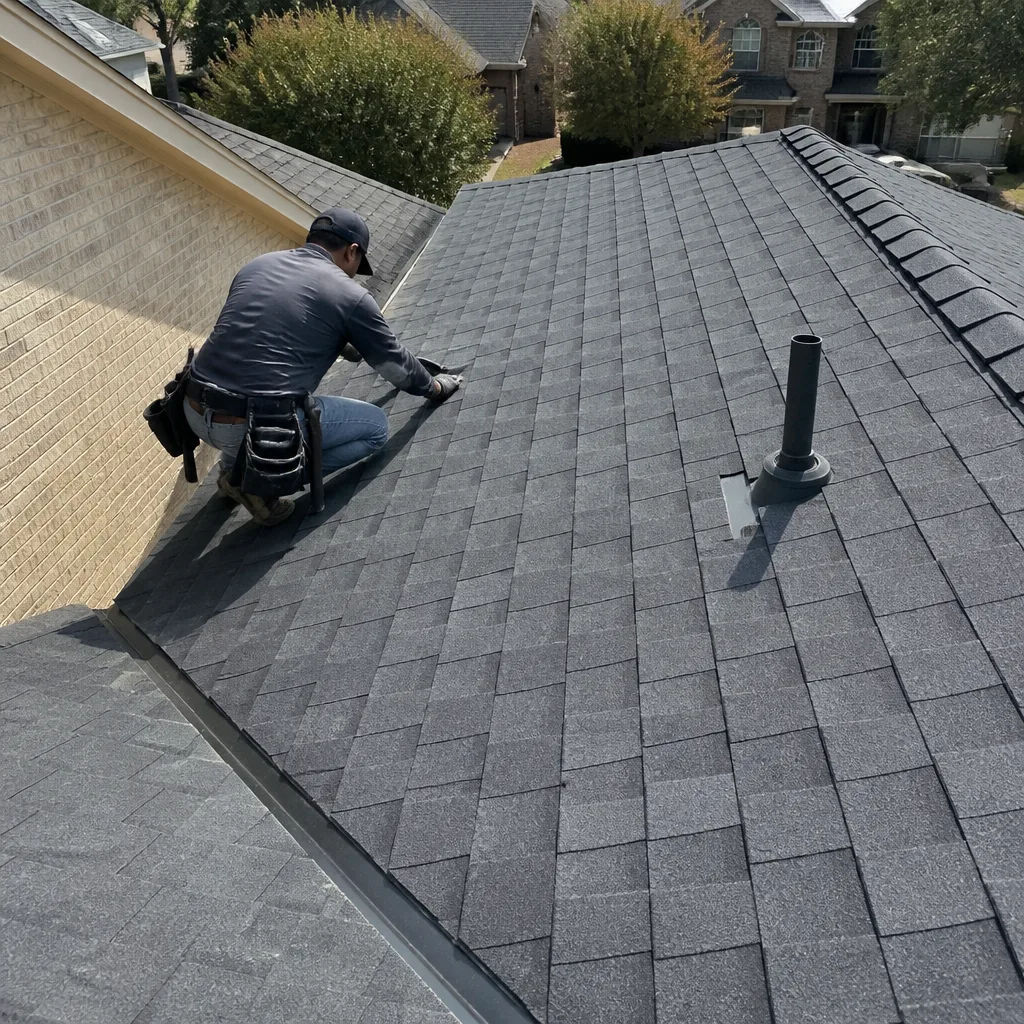 After
AfterWhen to Call a Professional
You should call a professional Fort Worth roofer the moment you notice granules collecting in your gutters after a storm, a ceiling stain that reappears after rain, or shingles curling at the edges in mid-summer heat. Those are not cosmetic issues. A granule loss problem on a Fort Worth roof today is a bare mat problem in two seasons, and a bare mat is a leak waiting on the next thunderstorm. If you hear it, you’re too late to patch. If you see light coming through the attic boards, you’re past due. And if you’re buying or selling a Fort Worth home and the inspection report flags roof condition, get a contractor’s assessment in writing, not the inspector’s guess. Birchbark Roofing Fort Worth offers free estimates in Fort Worth. Call (682) 990-0964 and a live person answers, 24 hours a day, every day. We’ll send a background-checked, uniformed technician to look at the roof, and we’ll hand you a written price before any work starts.
Frequently Asked Questions
A full architectural shingle replacement on a typical Fort Worth home runs $9,800 to $18,600 in 2026, with most 22-square single-story homes landing between $12,700 and $14,900. That range reflects material grade, decking condition, and whether the bid includes full underlayment upgrades and haul-off. Call (682) 990-0964 for an exact written quote, not a range.
Budget $320 to $460 per square for materials, labor, and standard underlayment together on a typical Fort Worth roof. Premium designer shingles, steep pitches, or extensive decking replacement push that number higher. The per-square price includes everything that goes back onto the deck.
It shouldn’t if your contract uses specific language: decking priced per sheet, haul-off as its own line item, and a clause stating that any cost not itemized is included in the total. Without that language, unexpected decking replacement can add $1,000 or more to the job after it starts. At Birchbark Roofing, the written price is the price; if we miss something on inspection, we eat the miss.
Yes. A licensed Fort Worth roofer pulls the permit from the City of Fort Worth as part of the job, and the permit fee appears as a fixed line item on the bid. Permitting is not optional, and a contractor who skips it creates title problems for you down the road.
A standard 22-square tear-off and replacement in Fort Worth takes one to three days, depending on weather, roof complexity, and the extent of decking replacement. Summer heat can compress the workday, so some crews start earlier in the morning and finish by mid-afternoon to protect both the crew and the materials. For year-round timing tips, see Seasonal Roofing Care for Fort Worth: Year-Round Homeowner’s Guide.
For most Fort Worth homes, yes. A Class 4 shingle adds $550 to $990 on a standard roof and typically earns a 5% to 35% discount on your wind and hail premium with most Texas carriers. That can offset the upgrade cost within two to three years, and the impact resistance keeps protecting you through every hailstorm after. Ask your carrier for the discount percentage in writing before you decide.
The Bottom Line
The $4,200 gap between Fort Worth bids is not a mystery. It’s scope. One contractor is pricing the roof as it is applied: decking included, haul-off covered, underlayment upgraded, ventilation corrected. The other is pricing a best-case scenario that rarely survives the first tear of the old shingles. The fix is boring and free: demand a written, itemized price before you sign. Check the line items against the six core categories. Confirm the warranty in writing. Then call the roofer who gave you all of it without being asked. That’s the company that priced the roof honestly, and it’s the company that will stand behind it when Fort Worth hail season starts again. Explore more guides & resources from our team.
Written by Erik Lindgren, Owner at Birchbark Roofing Fort Worth, serving Fort Worth since 2000.